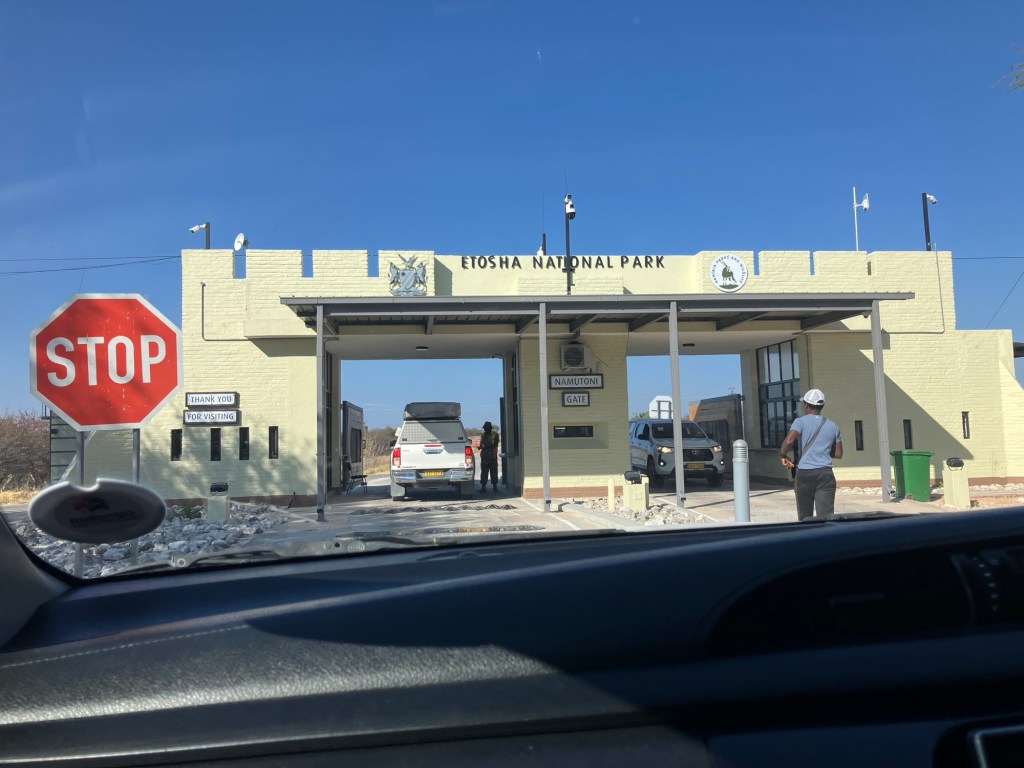
Up in the dark again this morning in order to be at the park gate for sunrise. We were near the front of the queue and had to show passports and declare if we had any weapons, drones, uncooked meat or plastic bags….
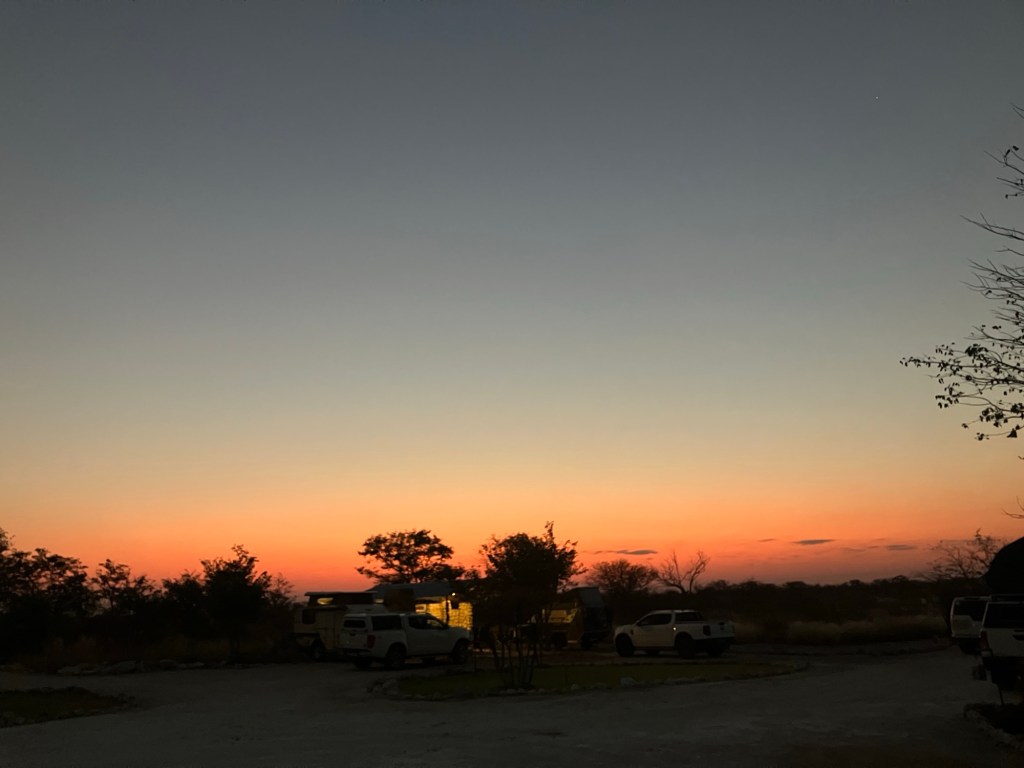
After a quick check in the back to confirm our claims, we were let through into an area the size of Wales to see what we could see…
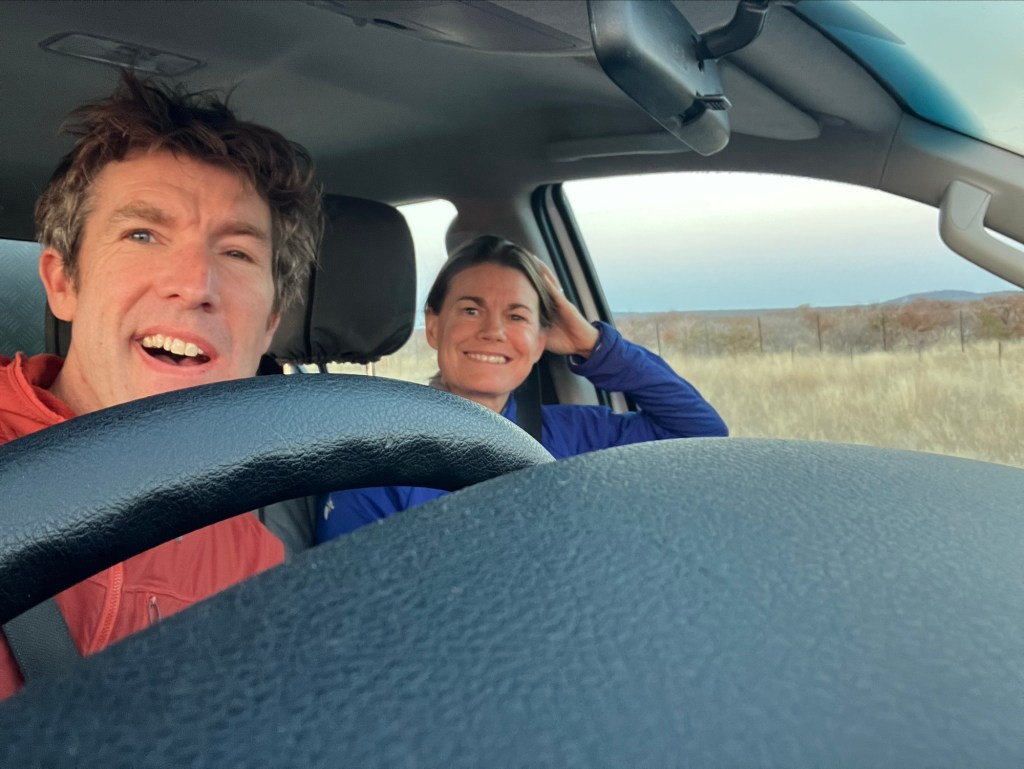
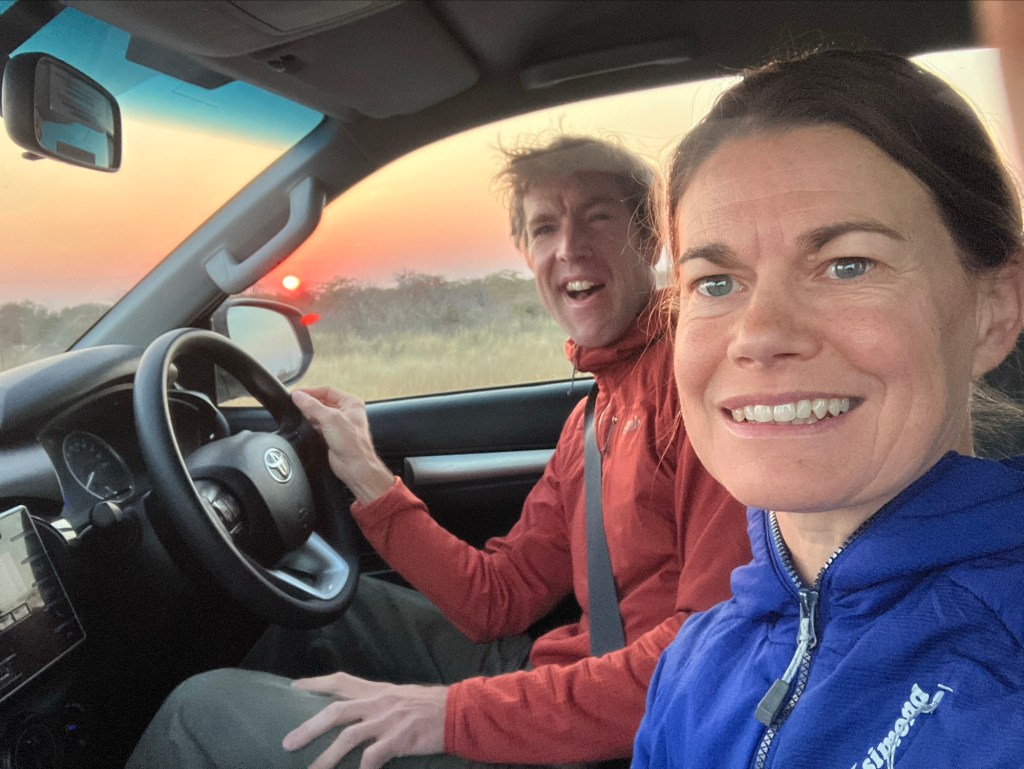
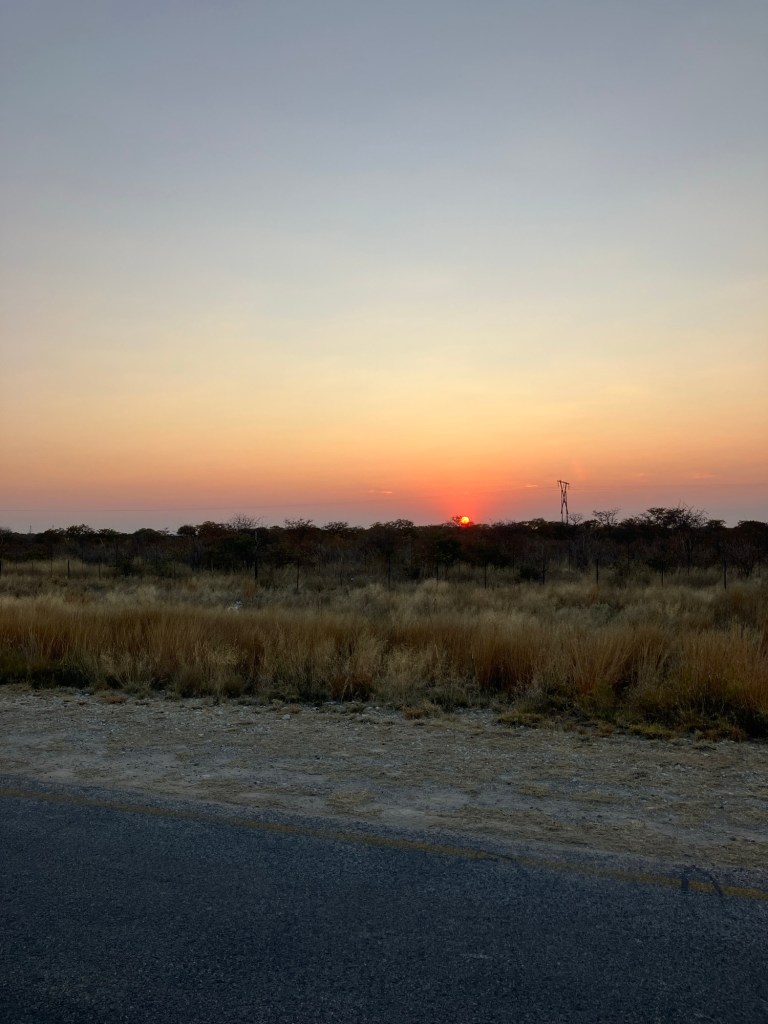
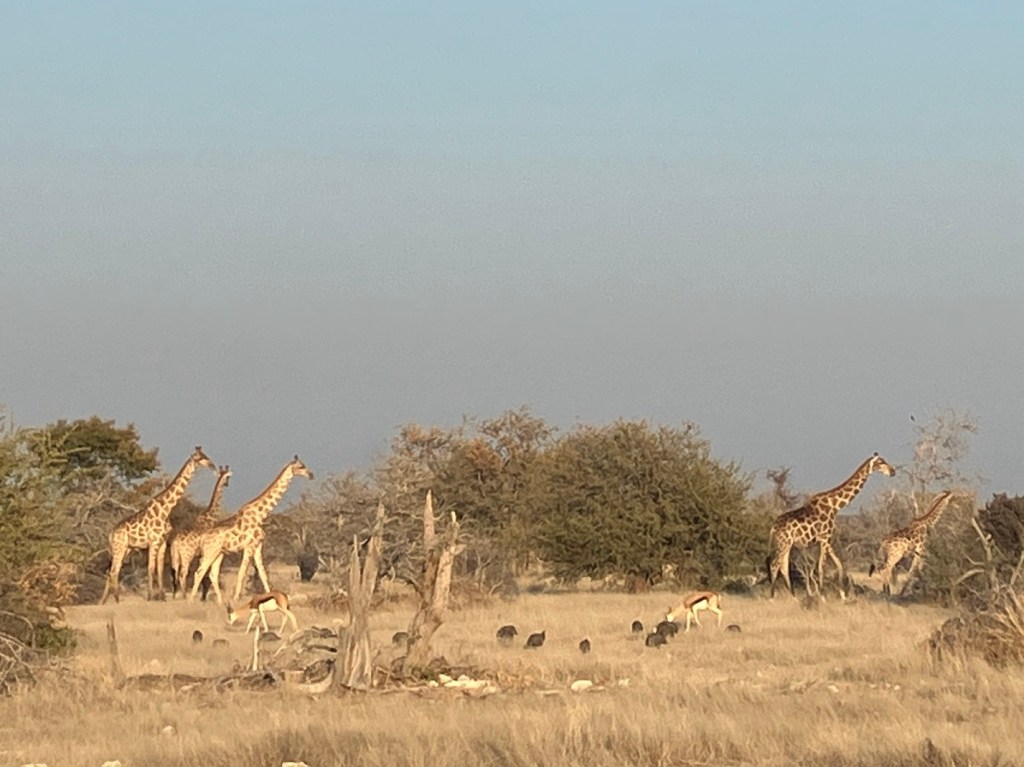
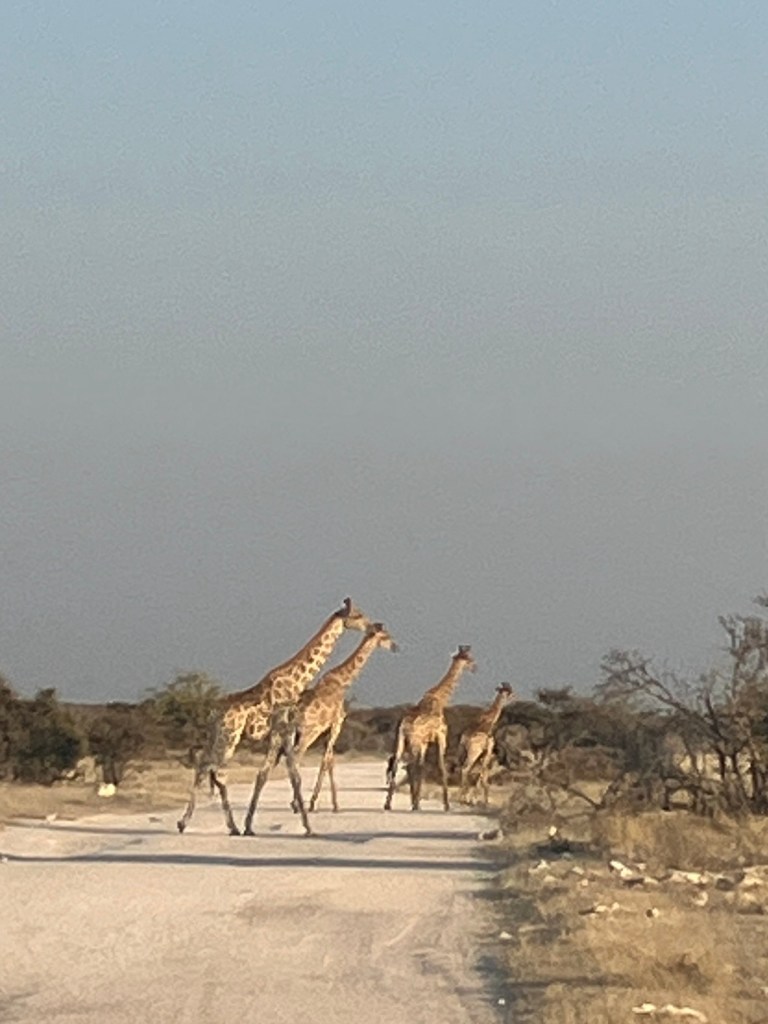
2km along the road was a small watering hole that we pulled in at to try and make the most of the early morning (best animal spotting time). It was mostly dried up, but there were still loads of birds, all types of deer and most exciting, some Jackel on the prowl. Just around the corner, we came across two big teams of giraffe and then our first zebras of this trip!
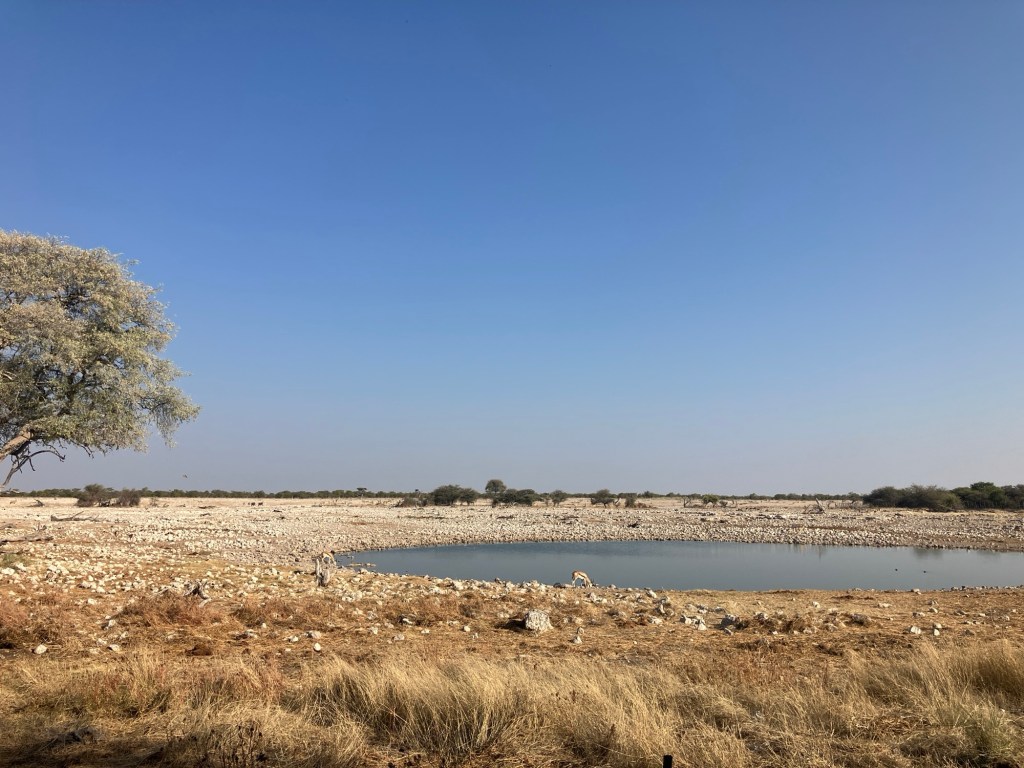
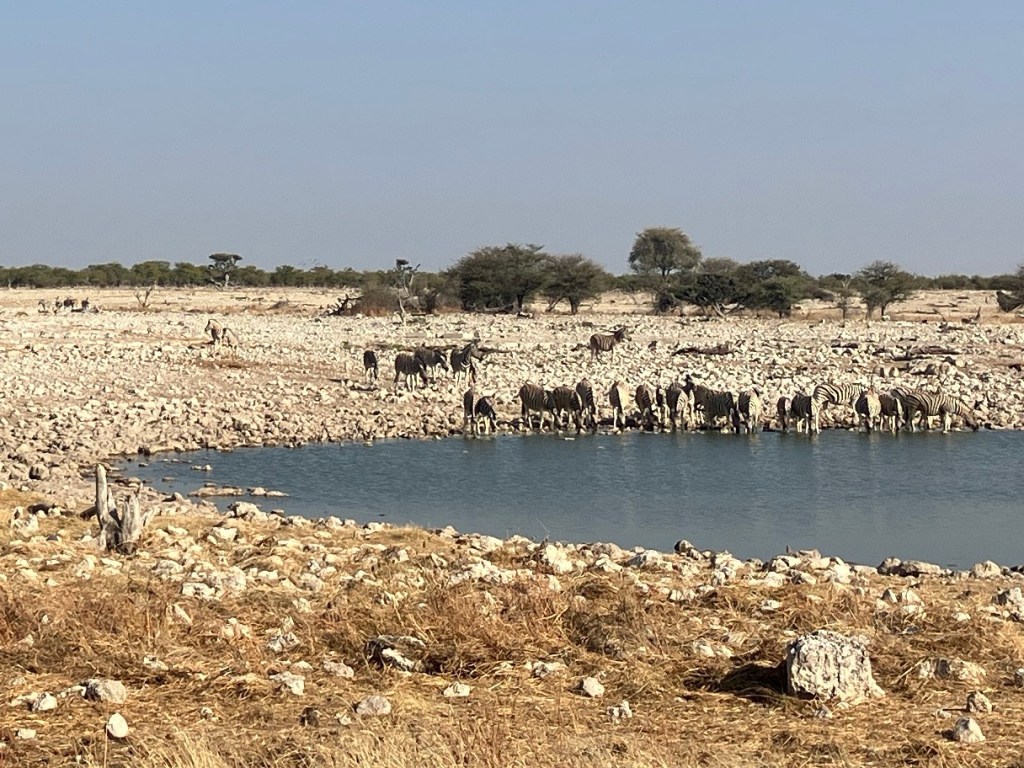
Another 20km got us to a much larger watering hole, at a big camp complex, with loads of chalets and camp areas. Most people had been and gone from the sunrise viewing, so we took a seat and watched vast numbers of zebra and impala come for a drink.
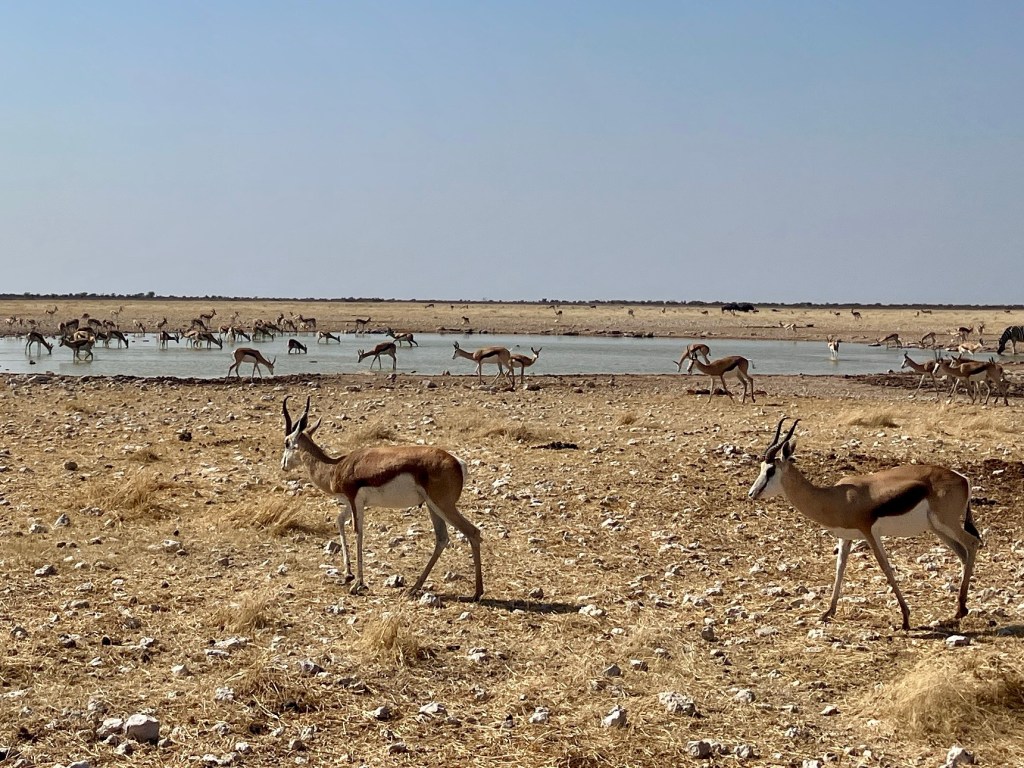
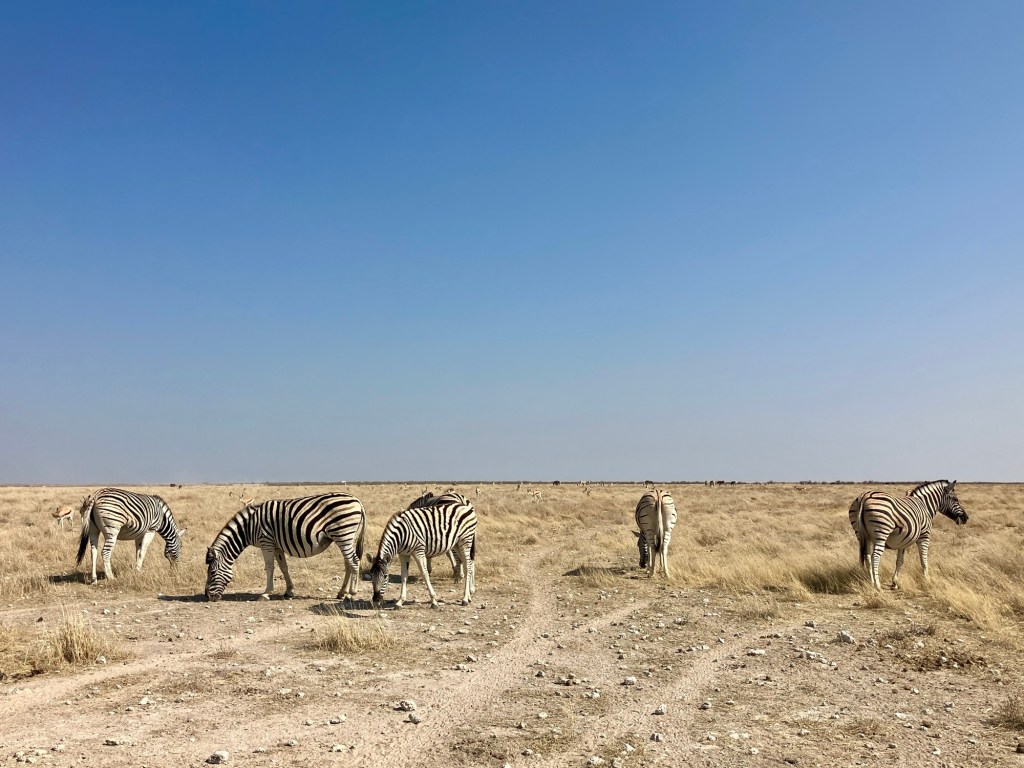
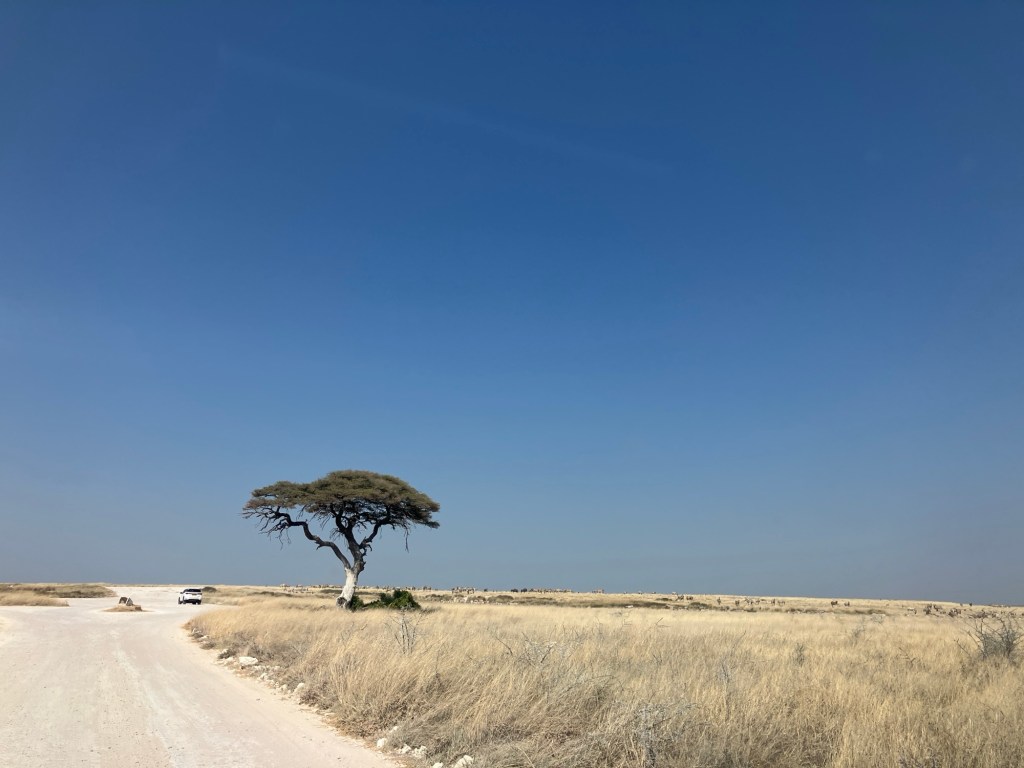
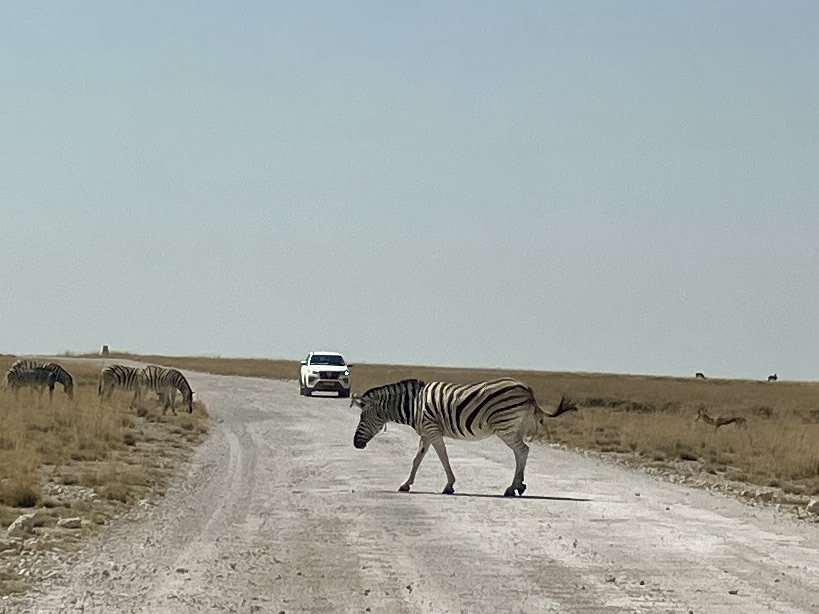
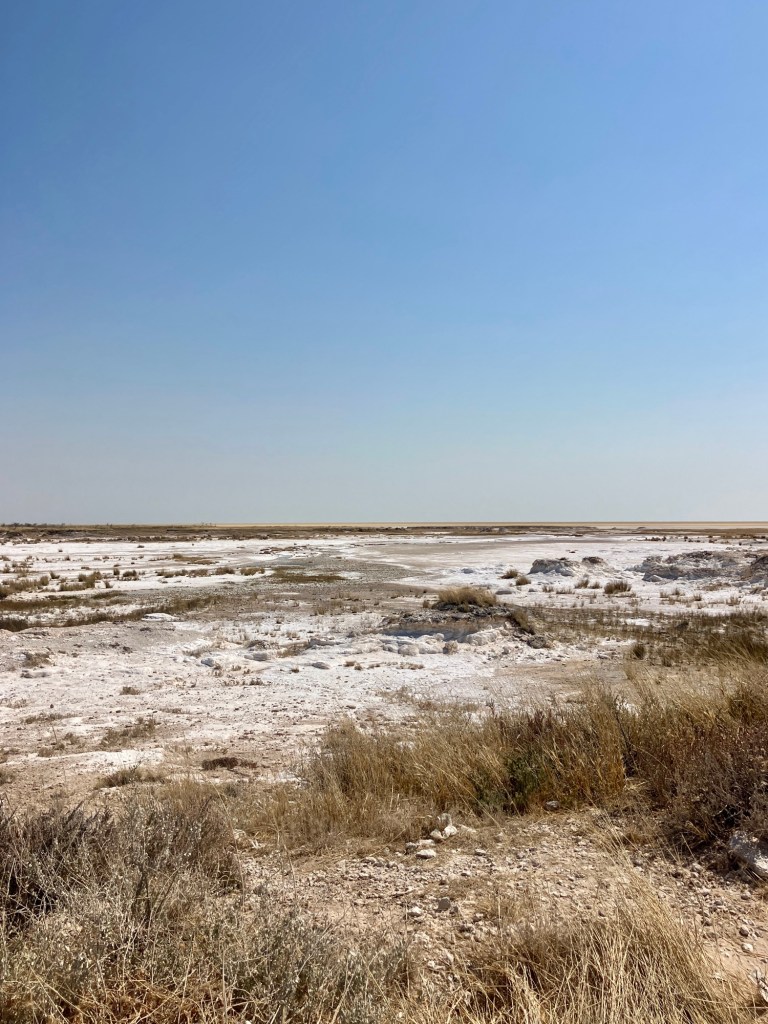
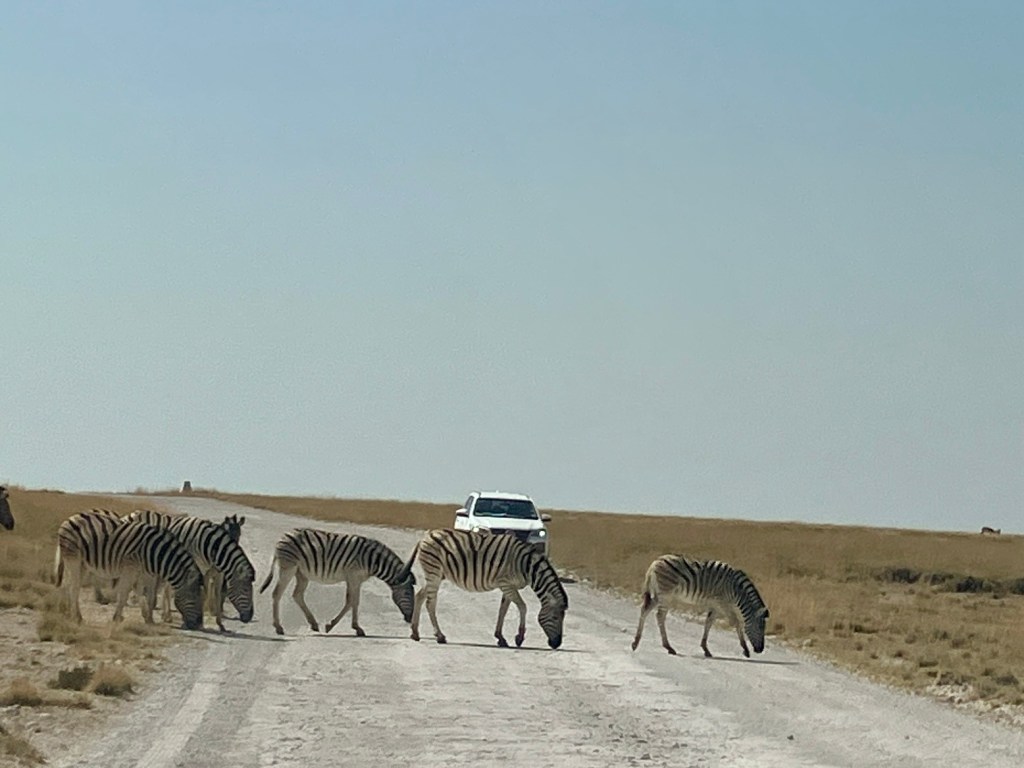
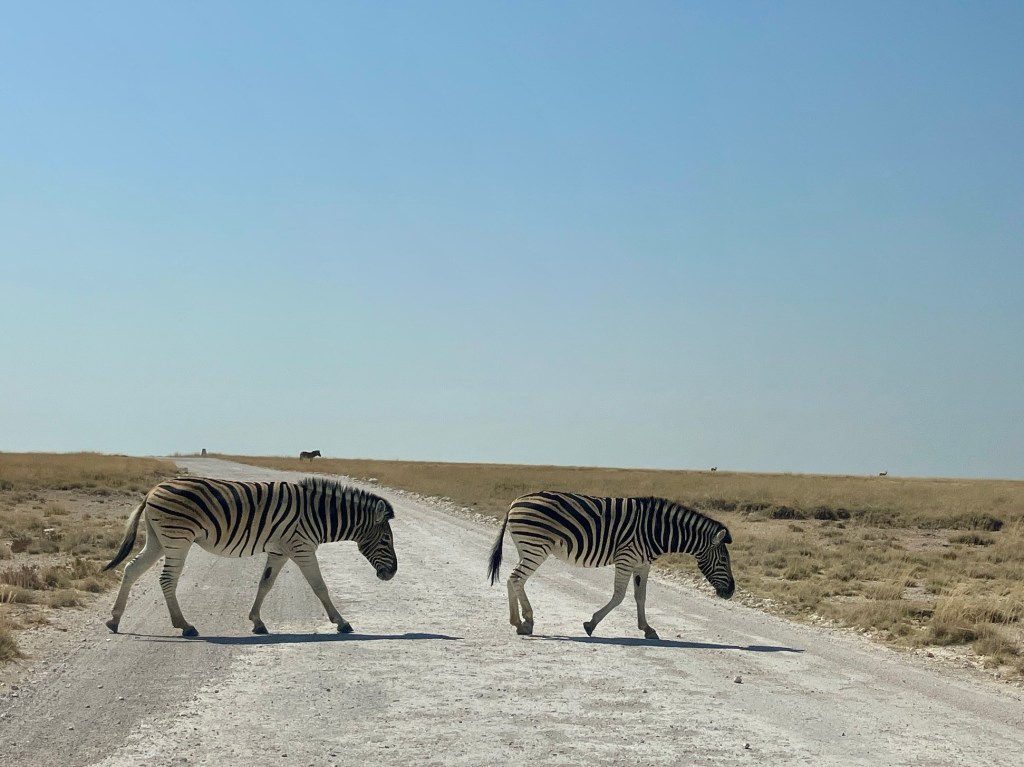
Unfortunately for us, the road around the Etosha Pan has recently closed so that it can be properly tarmaced. This meant that not only did we have a 47km detour along very rough gravel tracks, but it also meant that we had to bypass some of the other watering holes where the animals all hang out. Eventually we reached ‘the pan’ after a real life zebra crossing! The salt Pan was like arriving at the coast but with the tide forever out and eerie white rocks of salt lining the edges.
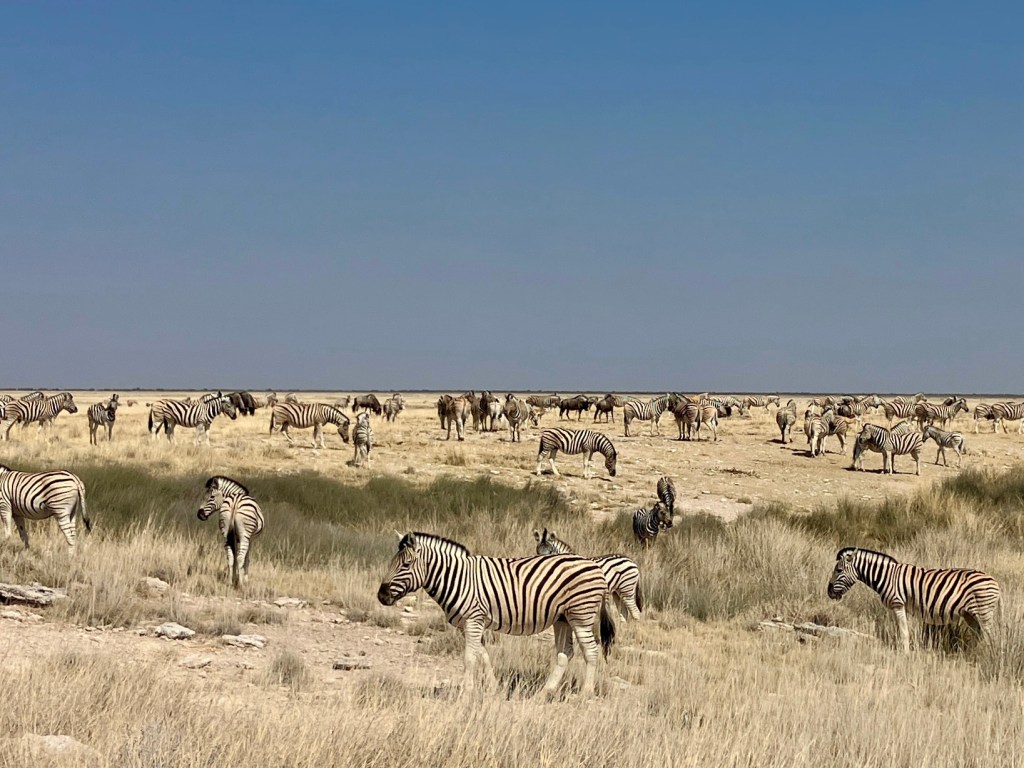
Still, we managed to see some big herds along the way and some good birds. The best being a Lilac Brested Roller (no photos – Google it!).
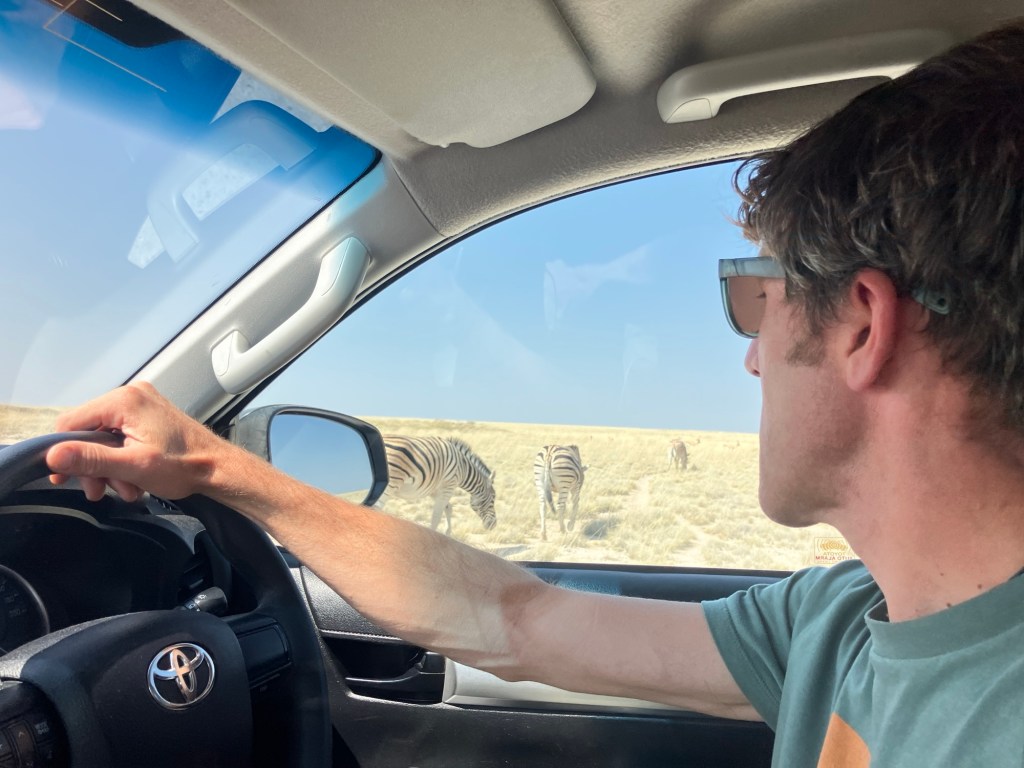
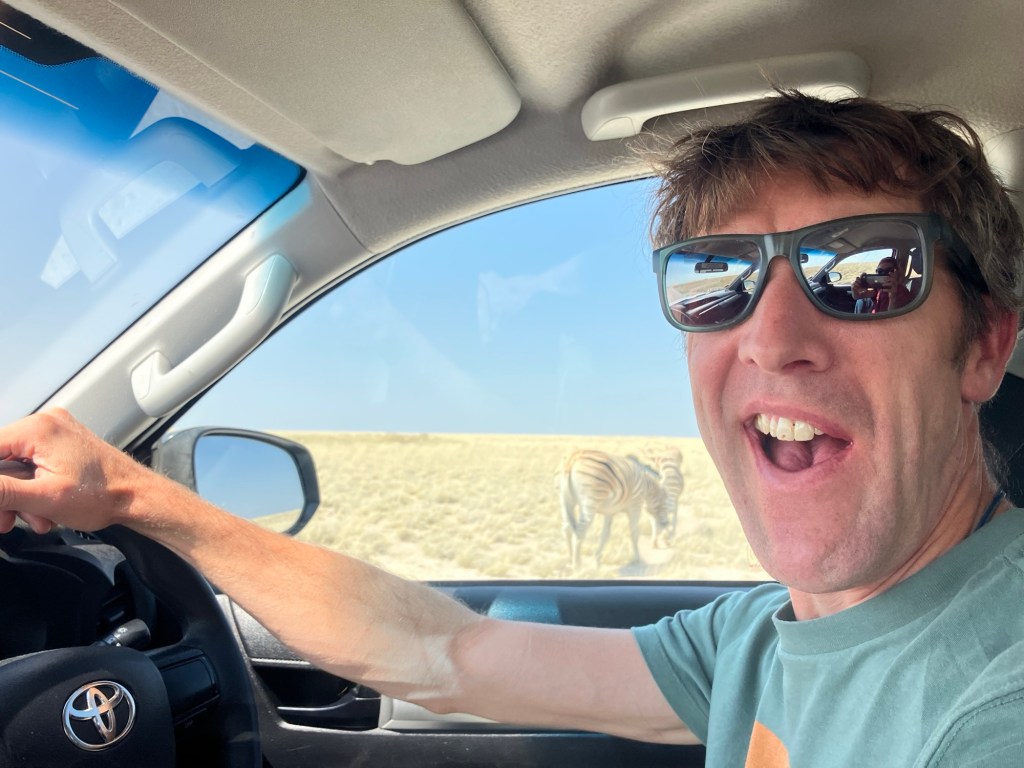
The final section of track to the Halali Campground was a real bone shaker and through thicker woodland, so there wasn’t much to see, which in some ways was good as we mostly had our eyes glued to the road in an attempt to dodge the ruts and holes.
After we’d checked in at the camp ground, we needed a quiet sit down to recover from the drive! There’s a sort of cafe/restaurant area, but our self-sufficient supplies looked much more appealing.
Feeling refreshed, we walked over to the campsite water hole (not a bar – the one for animals, and the reason we’re camped here!).
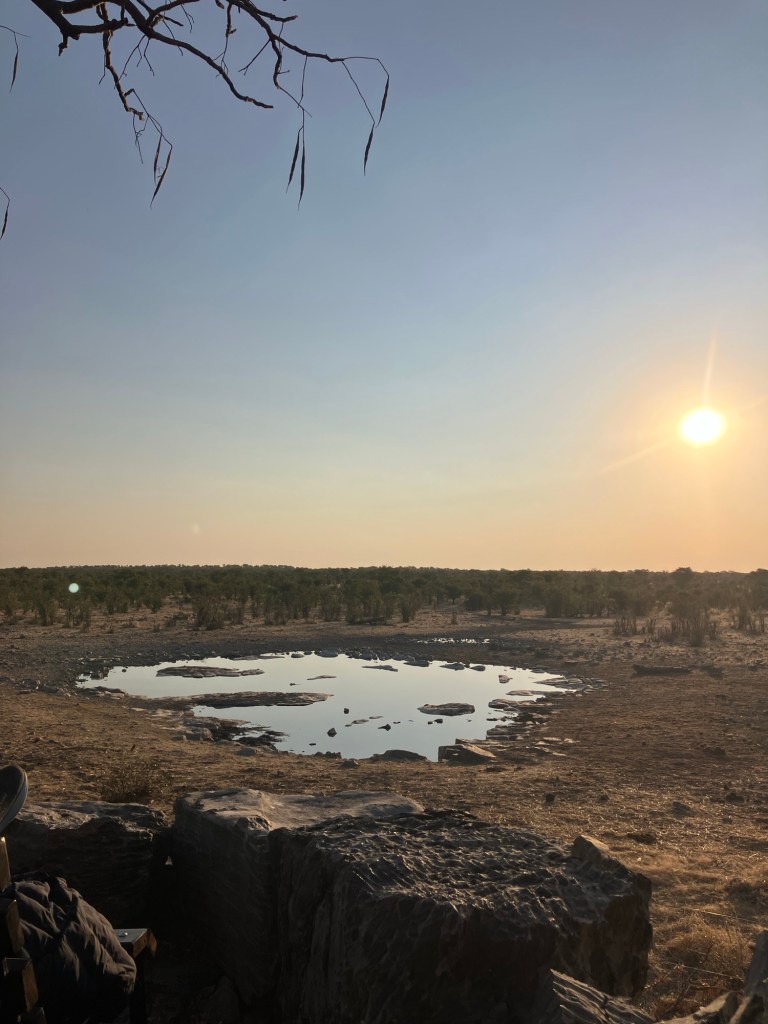
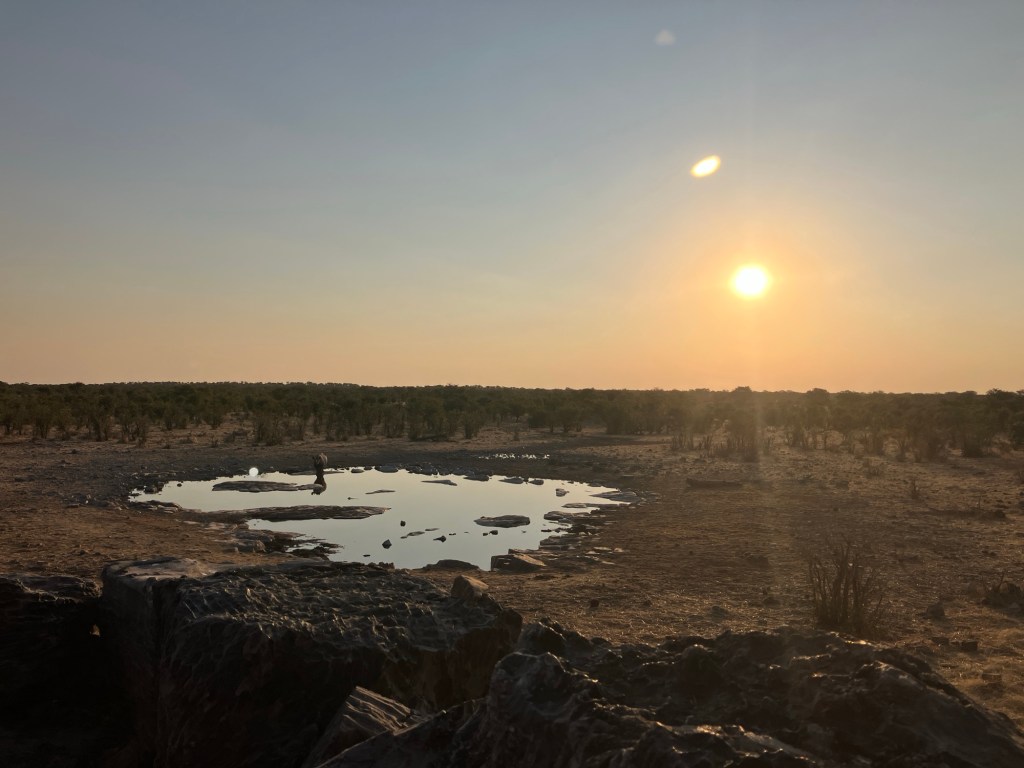
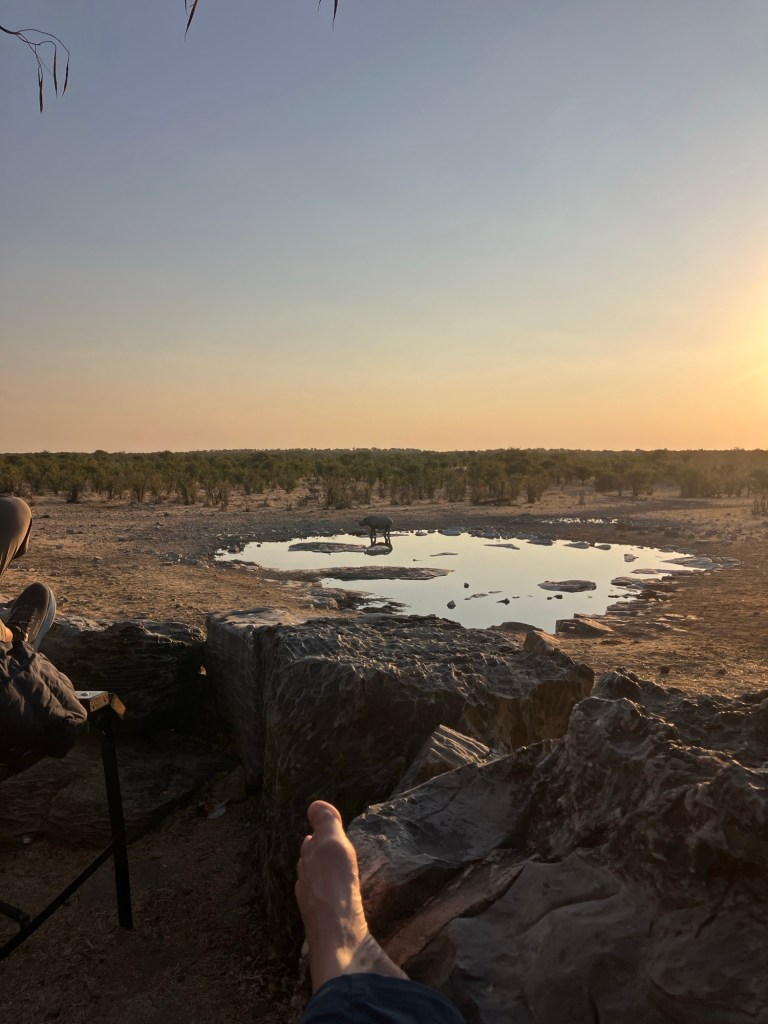
There were some Gemsbok, Impala, and tortoise knocking about, but it wasn’t until dusk that a big Rhino casually appeared from between the trees. Astonishing. Neither of us had seen one of them before. Probably good we never bumped into one walk walking in the Erongo mountains. They are big!
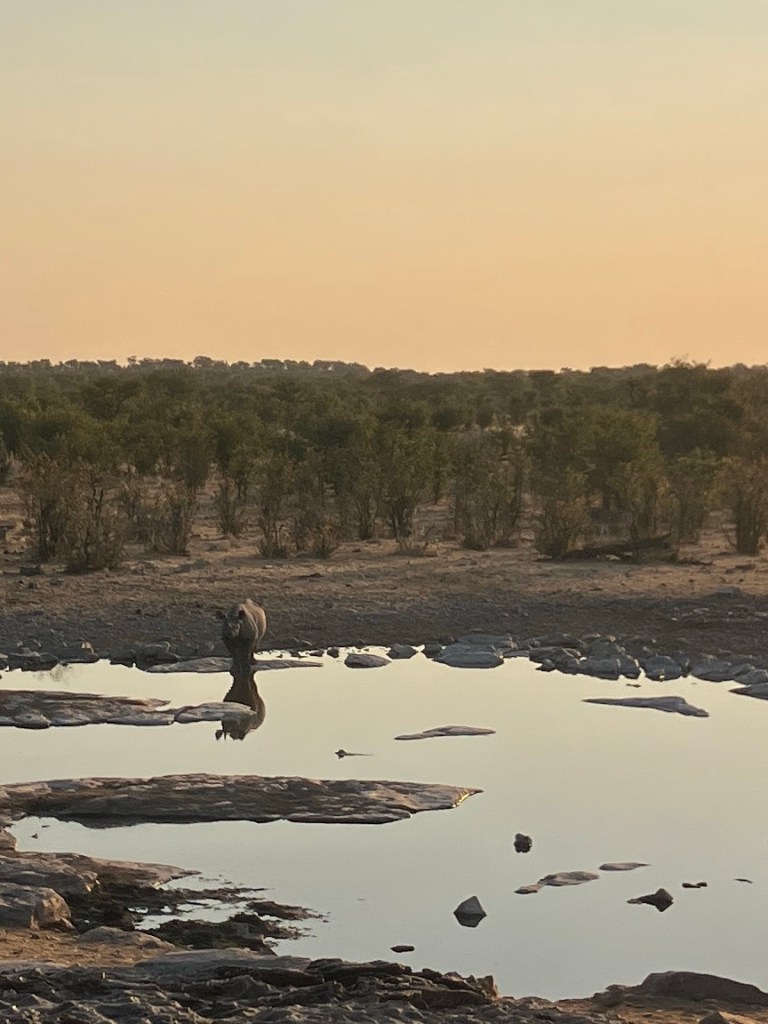
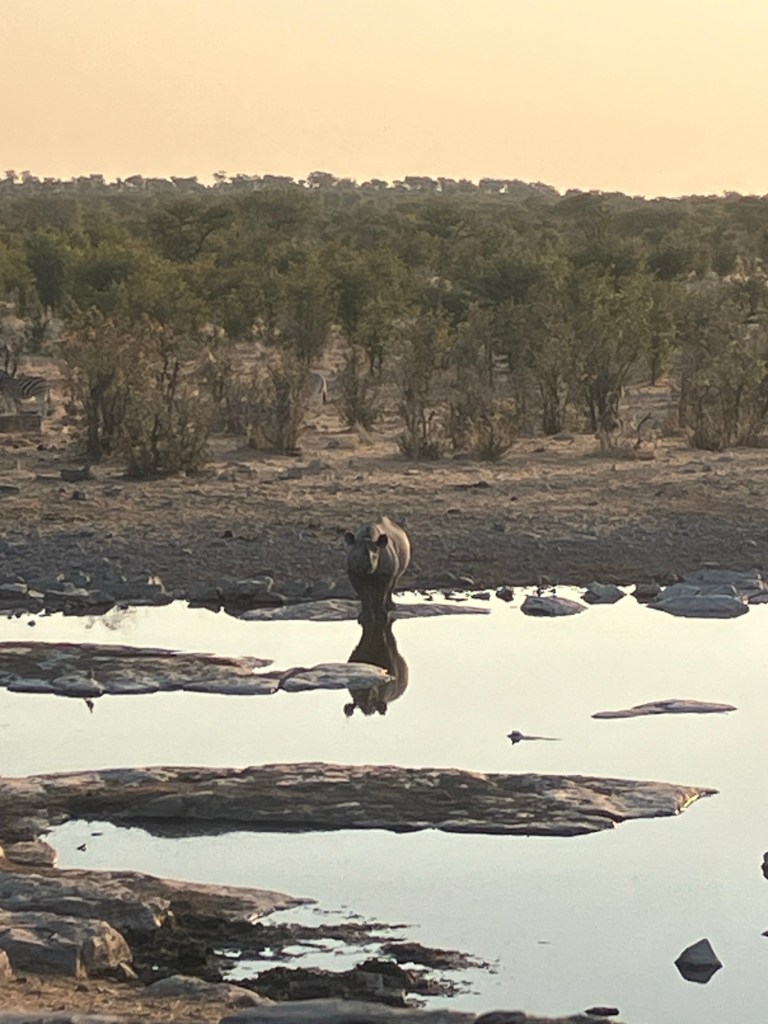
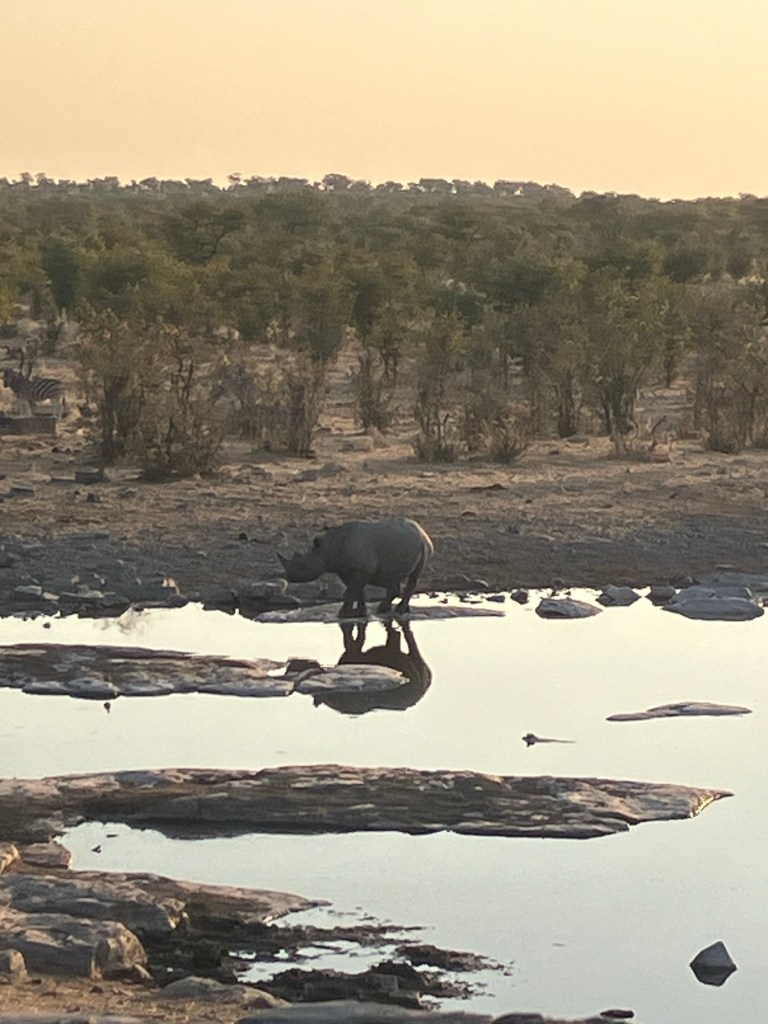
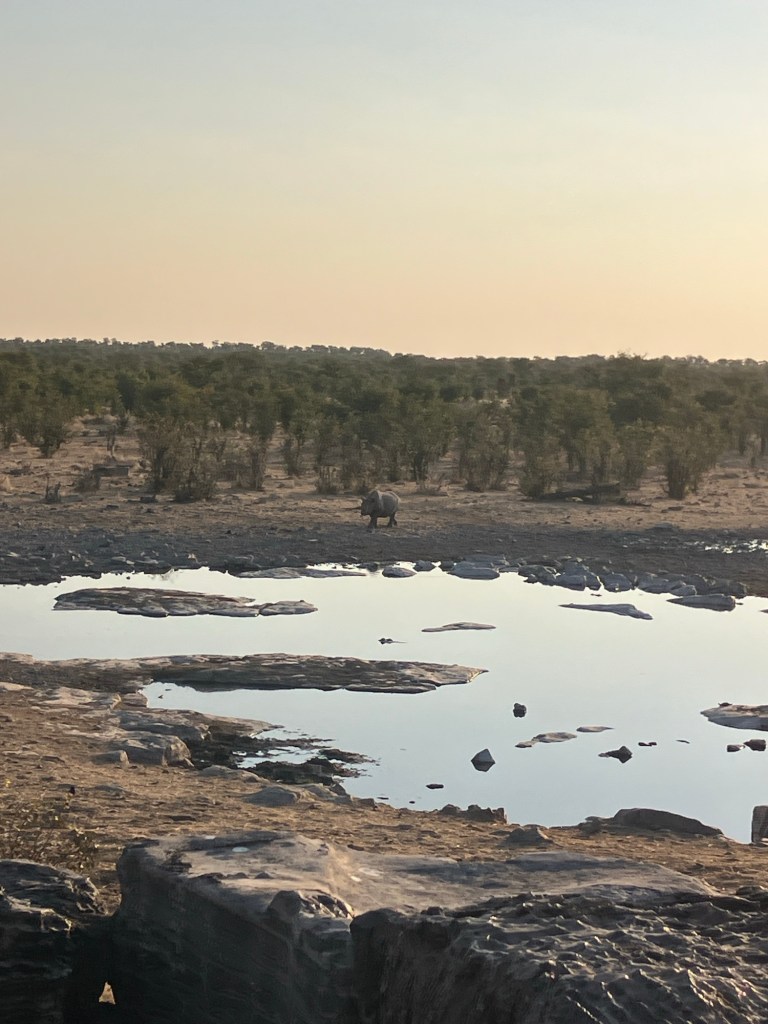
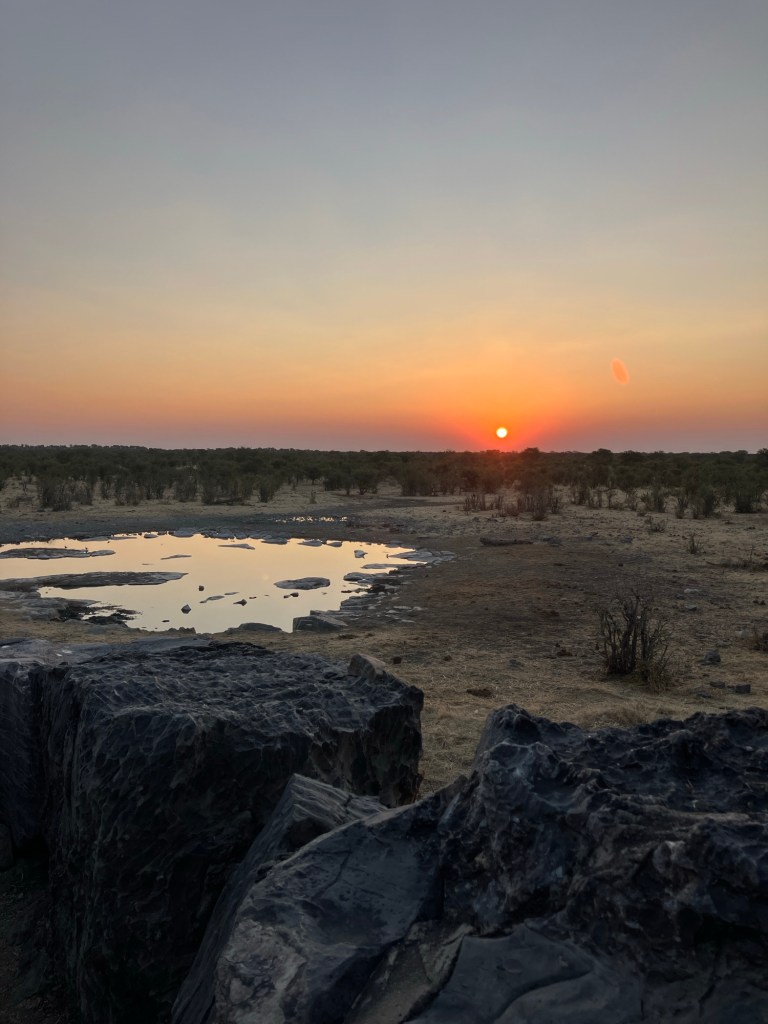
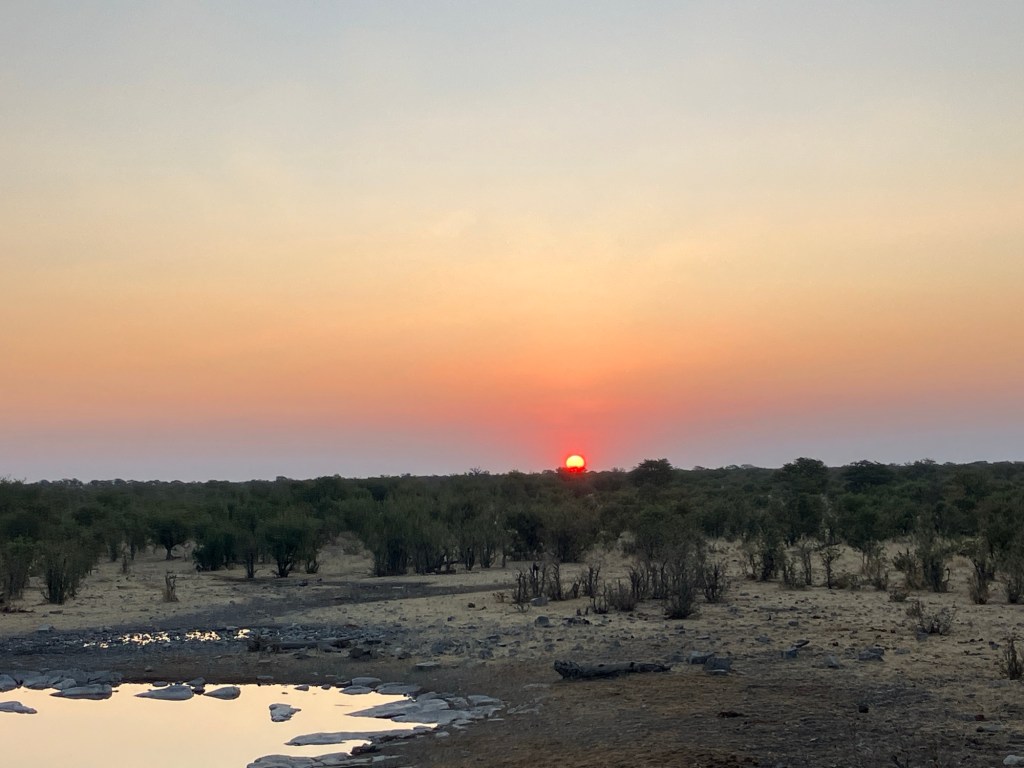
We stayed until sunset, which was almost as impressive as the animals.
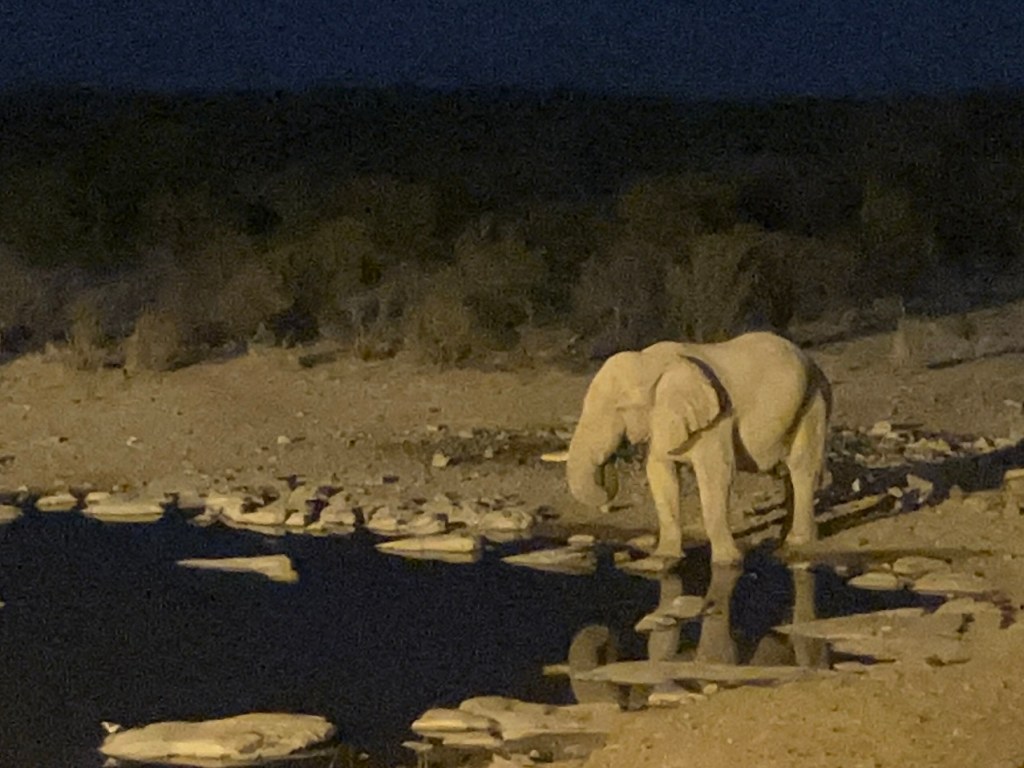
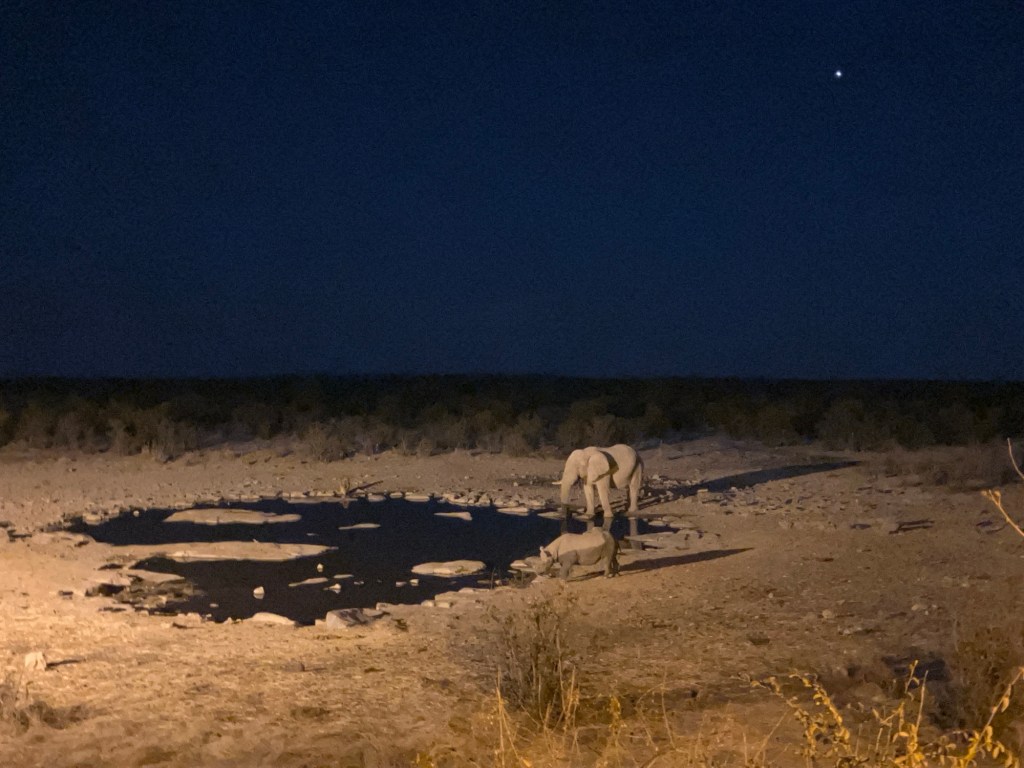
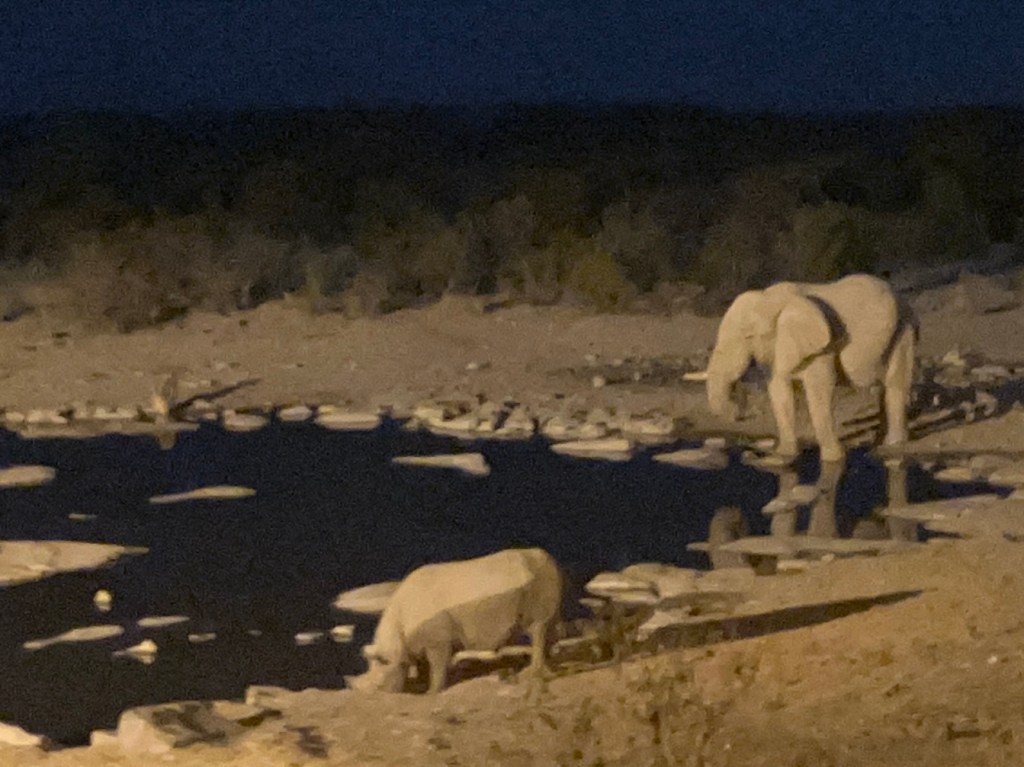
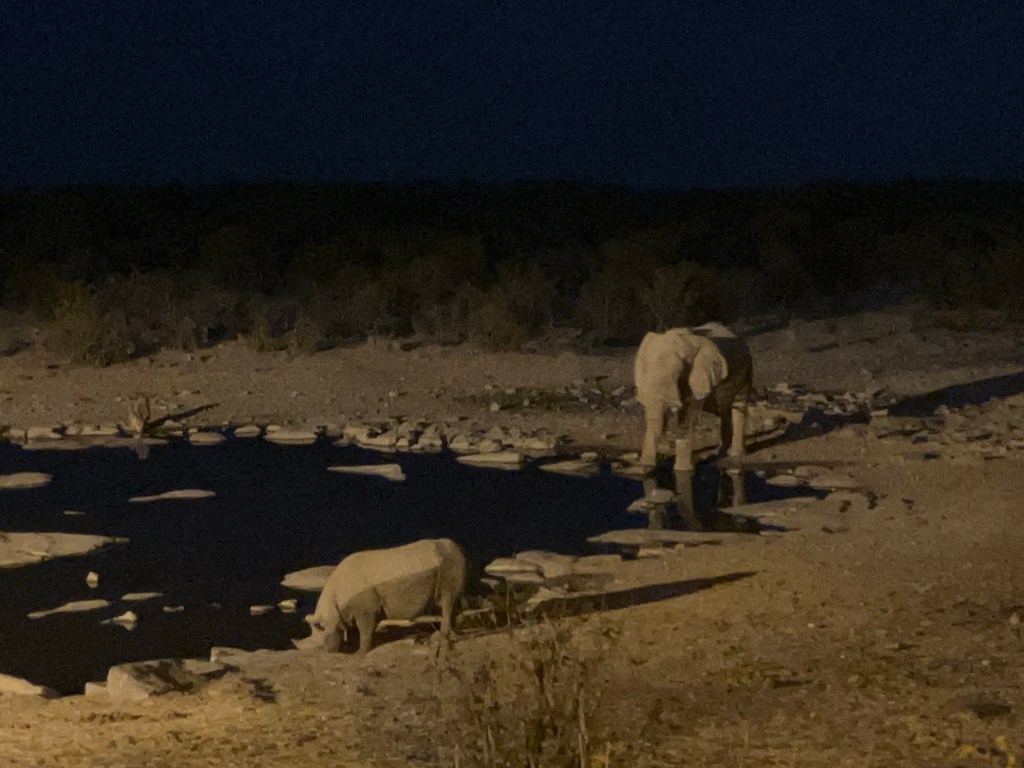
Following dinner back at camp, we returned after dark to try our luck again. We could barely believe our eyes to find a lion, elephant and rhino as quietly taking a drink at the waters edge! (Lion is very small compared to the big guys – she’s on the far bank).
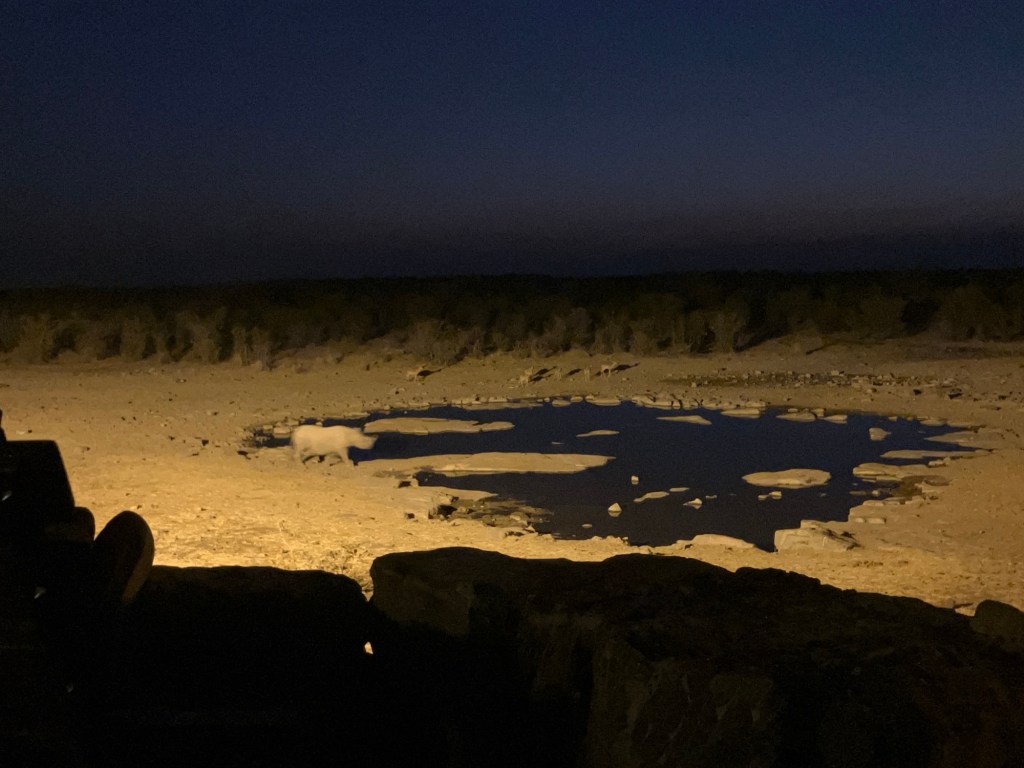
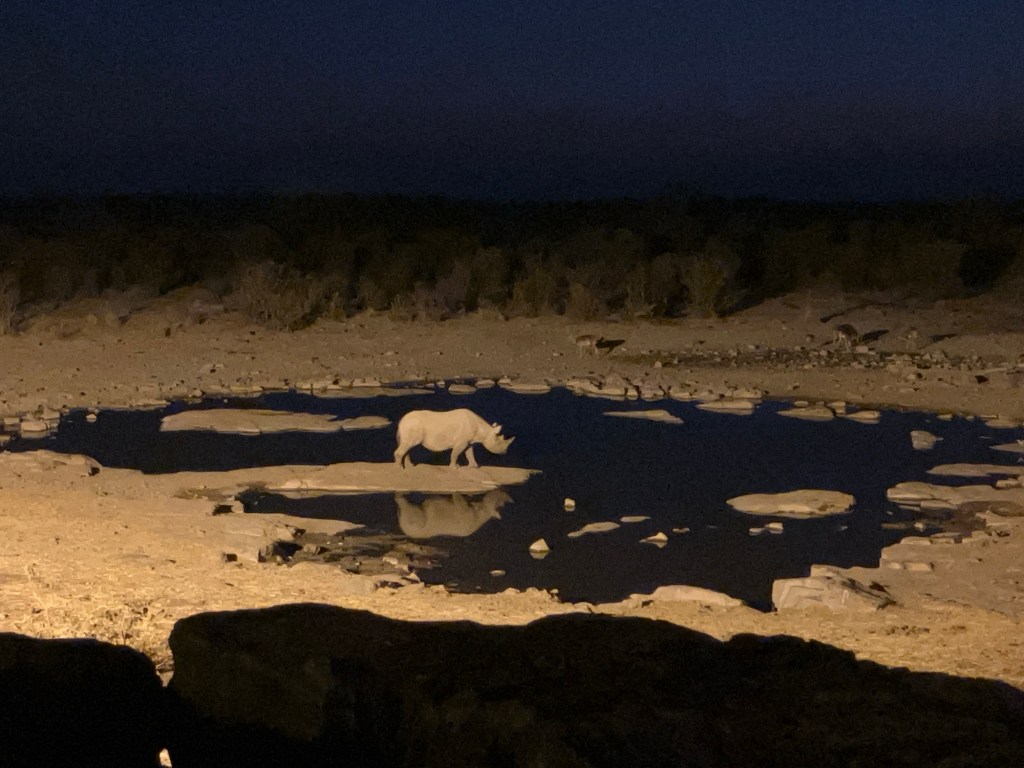
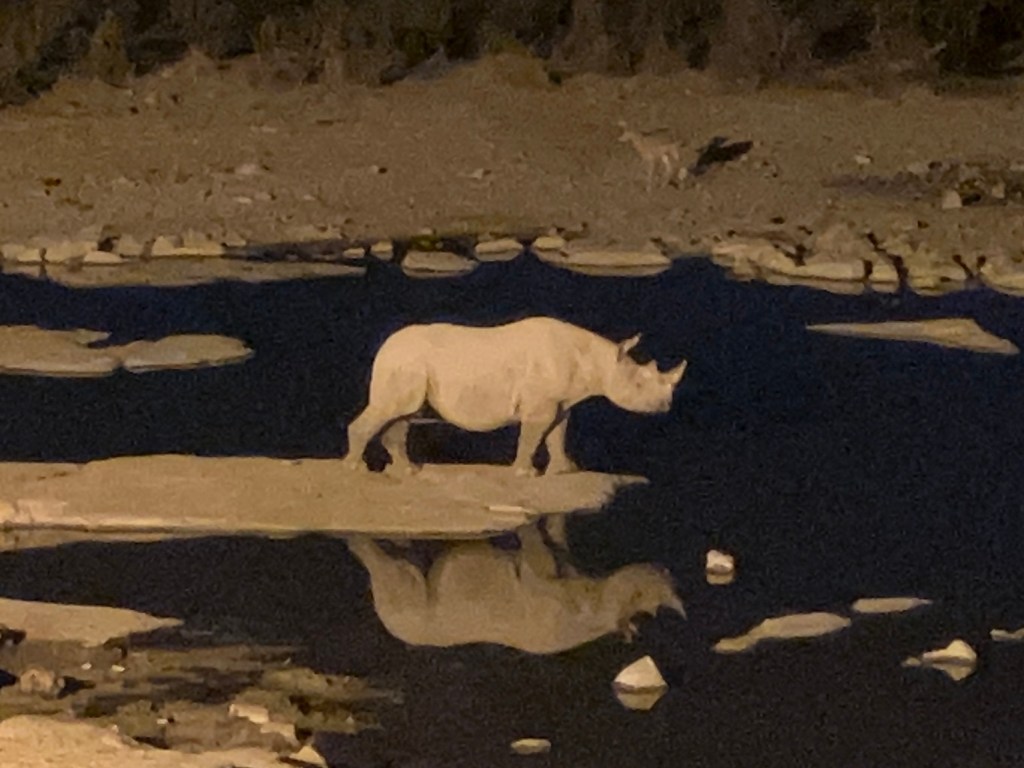
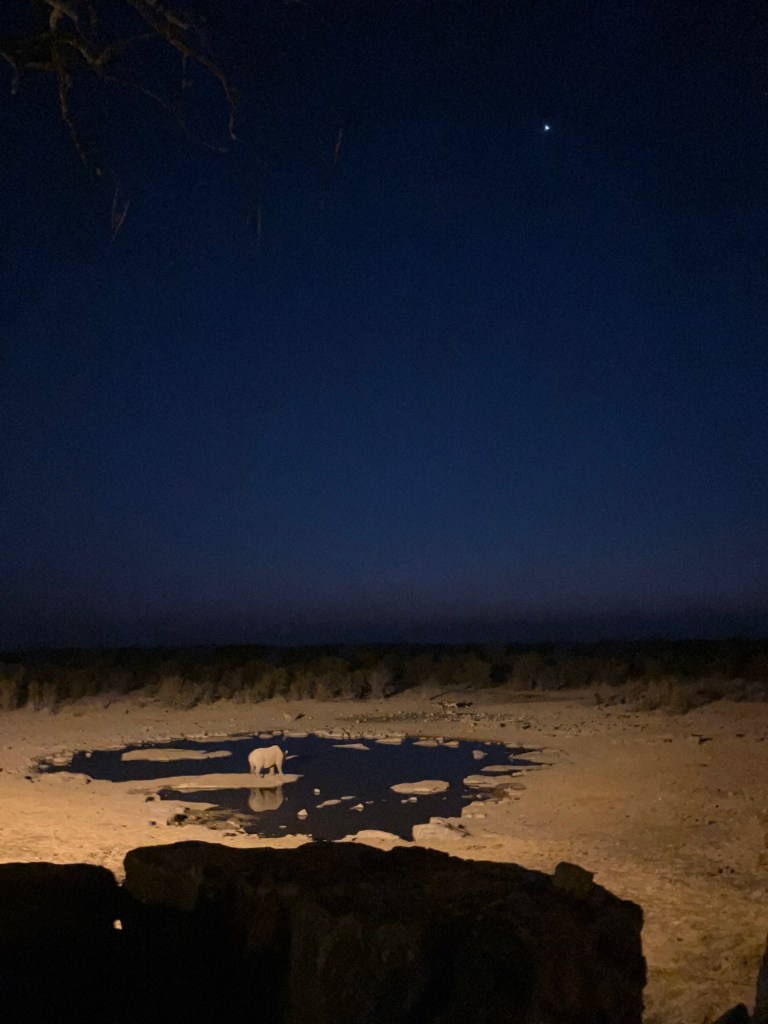
Buoyed up from this nocturnal success, we got up in the dark again the next morning and returned to the watering hole, which was just a short walk from the tent. It was just before 6am, so still cold, but we were armed with a blanket to sit on and our big duvet jackets. A hyena soon prowled past in the dusky light, which was exciting as I’d never actually seen one before. Apparently they have a very powerful jaw, and certainly look that way. On an expedition to Malawi that I led in 2003, one of my group had their walking boots taken by a Hyena from outside their tent in the night while we slept. The next day I found half of one boot – it had been bitten clean in half! Vibram sole and all!
A jackal appeared soon after, but disappointingly no other animals turned up. However, what we did see in the dark of the morning, was an incredible display of mysterious blue light from phosphorescence. The shimmering blue light was flowing around the edges of the rocks and when a bird waded in or took off, the ripples from the water all glowed electric blue. Absolutely incredible!
We waited patiently until the sun was well up at 8am then returned to camp for breakfast, with a plan to move on and try our luck elsewhere. Our first stop was at a viewpoint on the edge of the The Pan – the only place where you are allowed to get out of your vehicle. Beyond this is nothing…
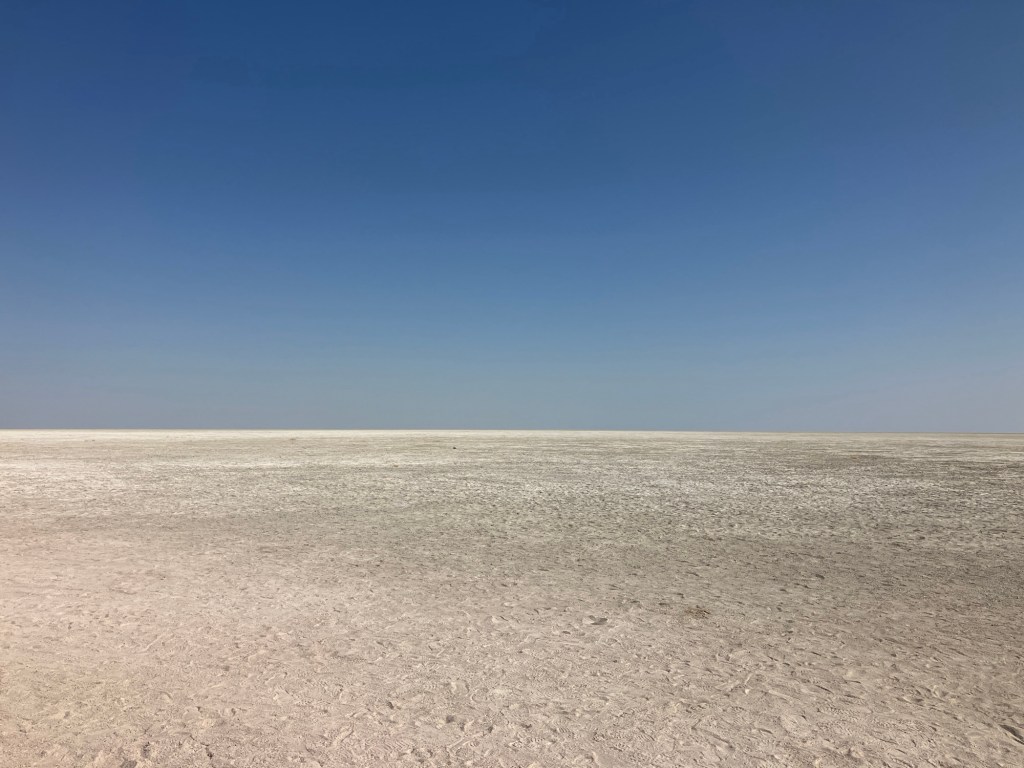
It’s about 300km until anything else appears!
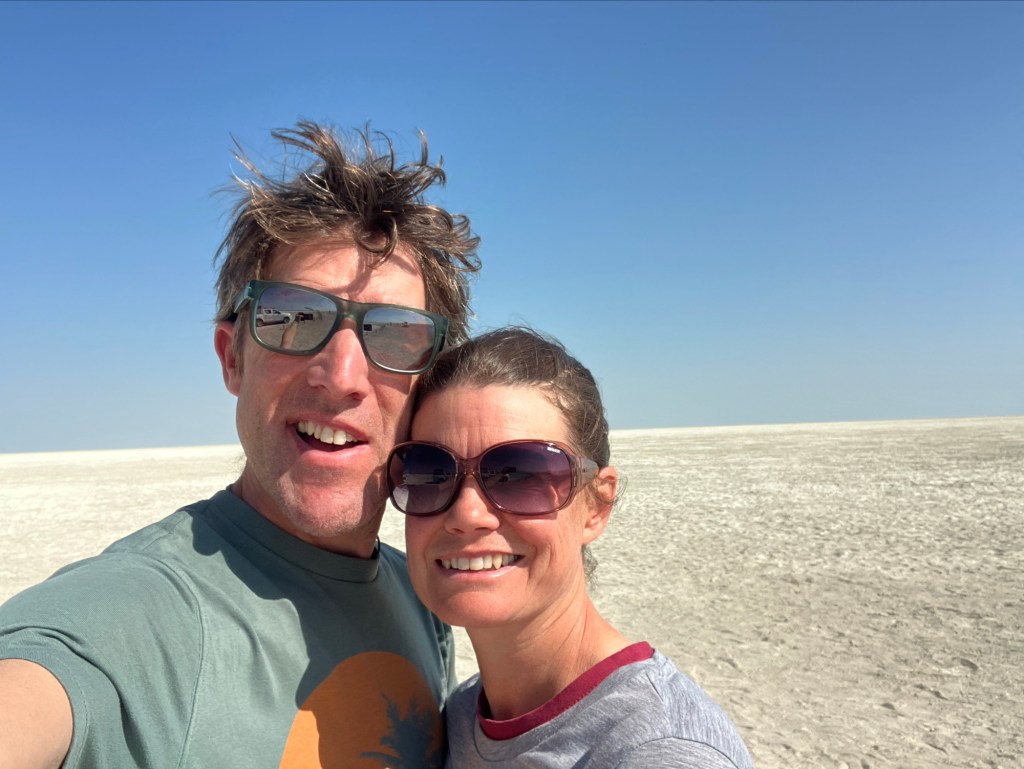
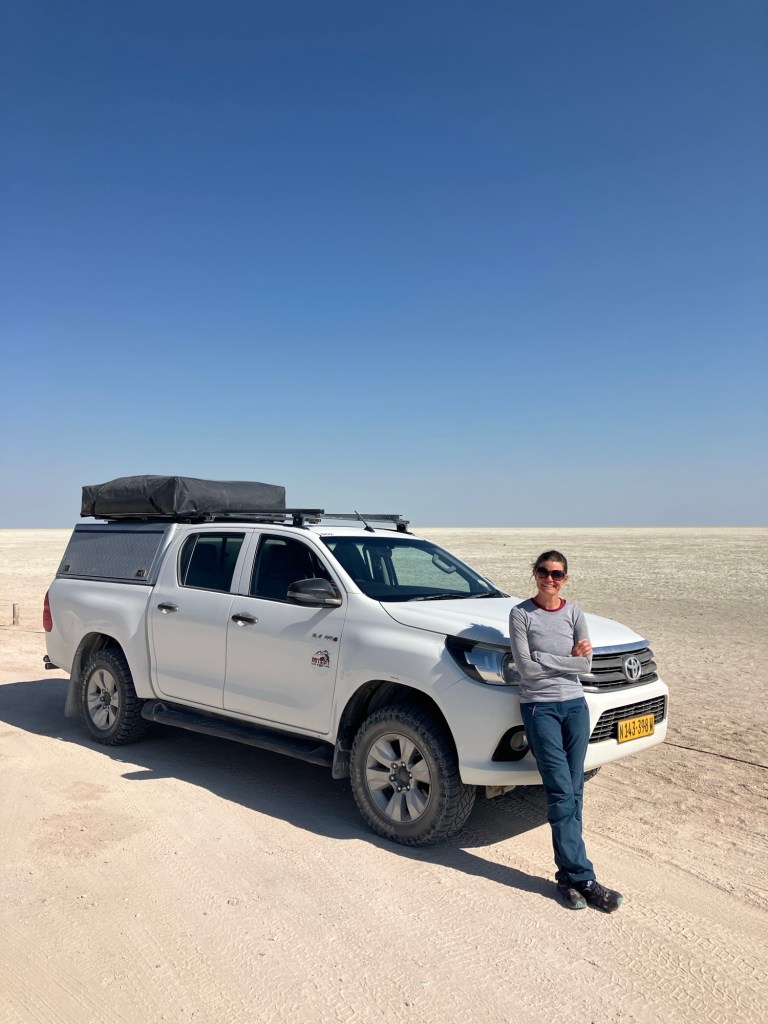
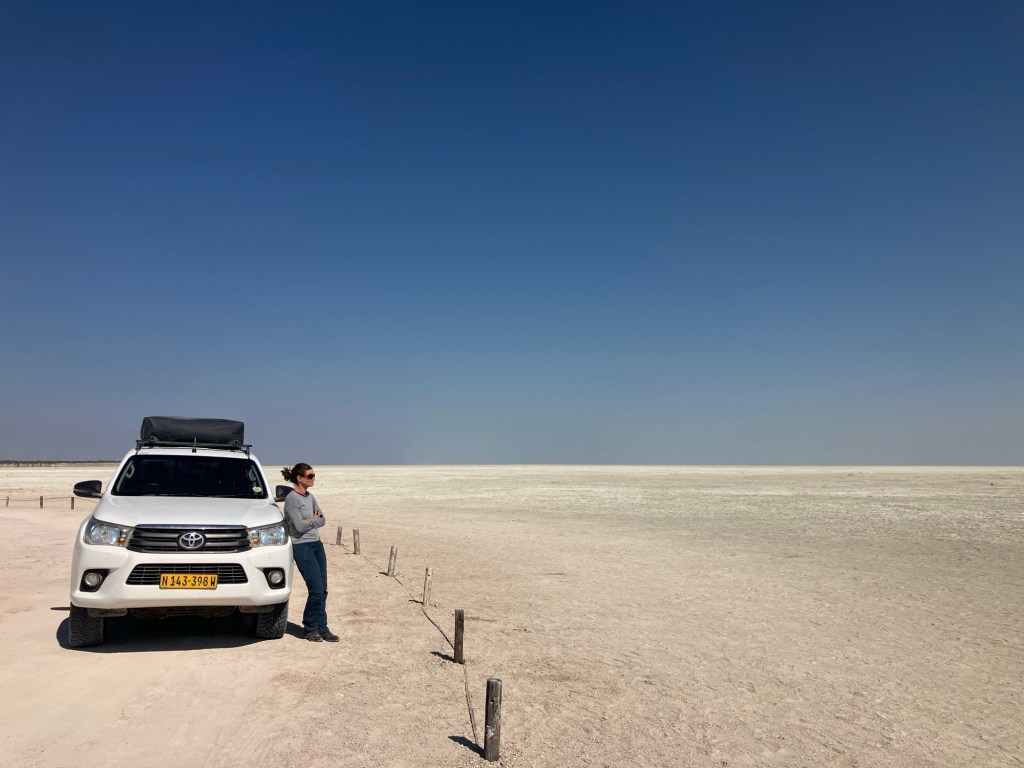
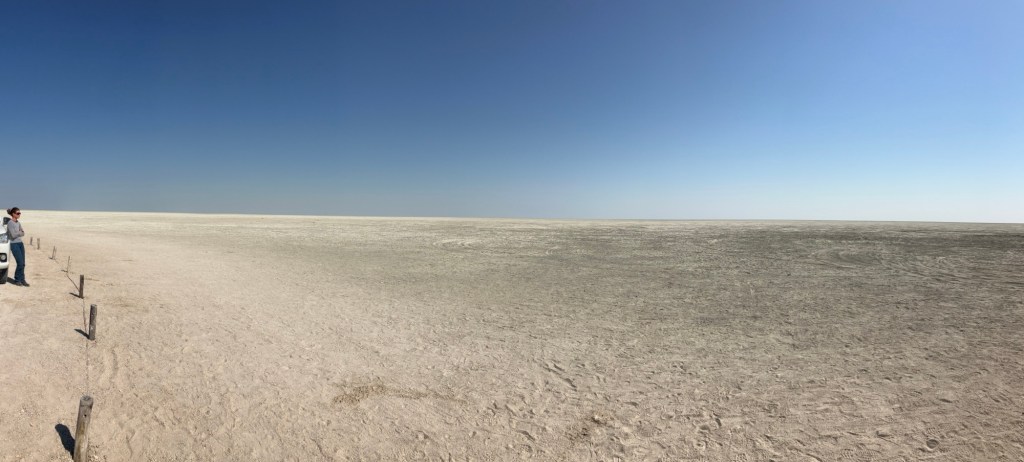
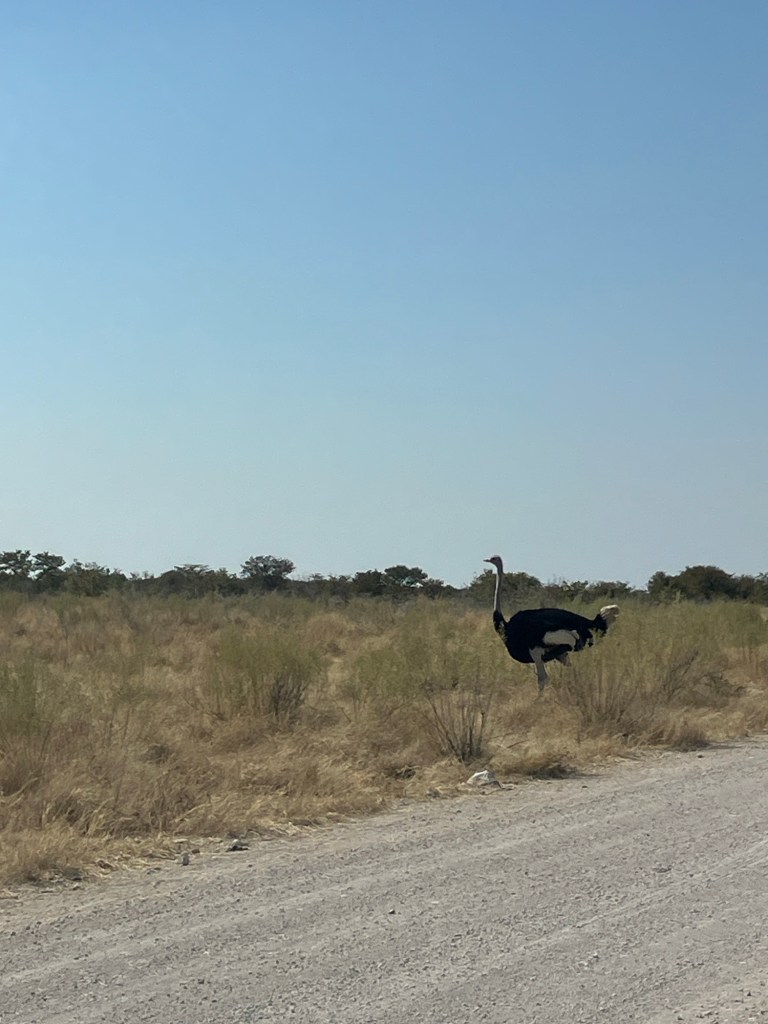
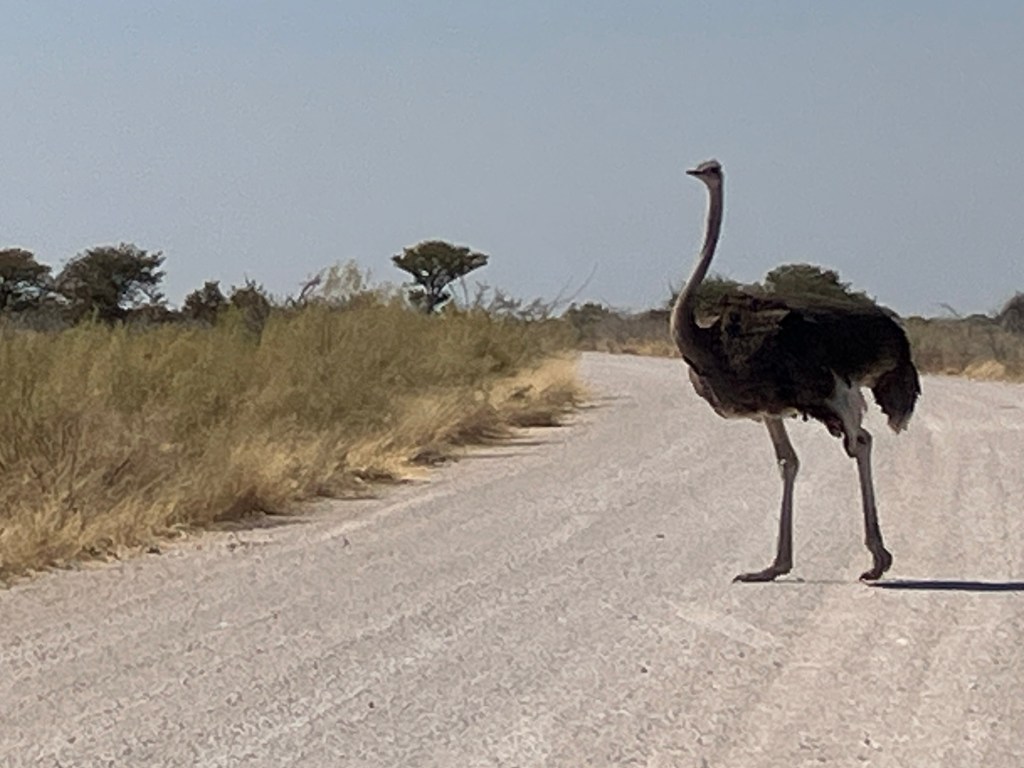
We then drove along the edge of the Pan and more amazing animals appeared!
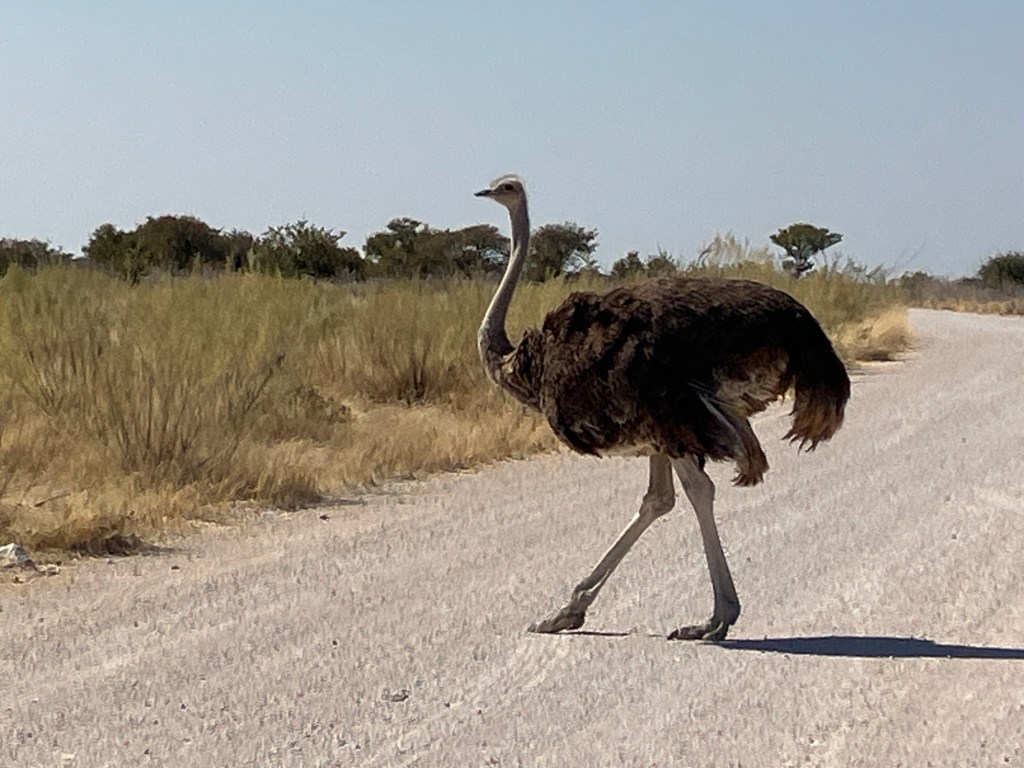
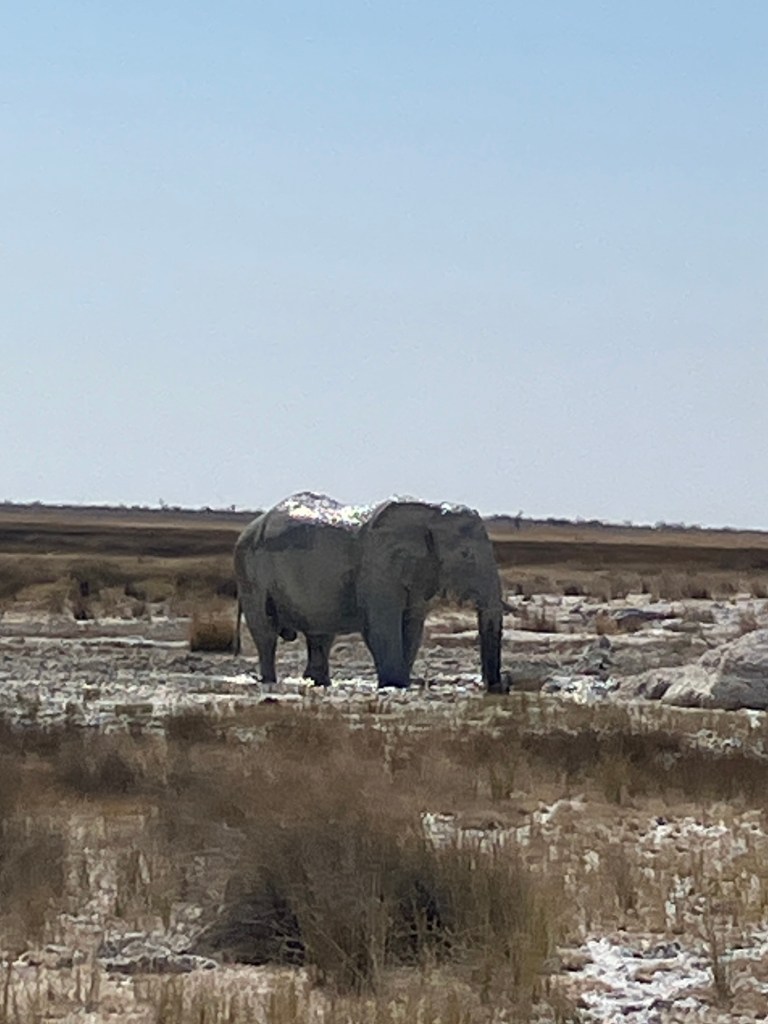
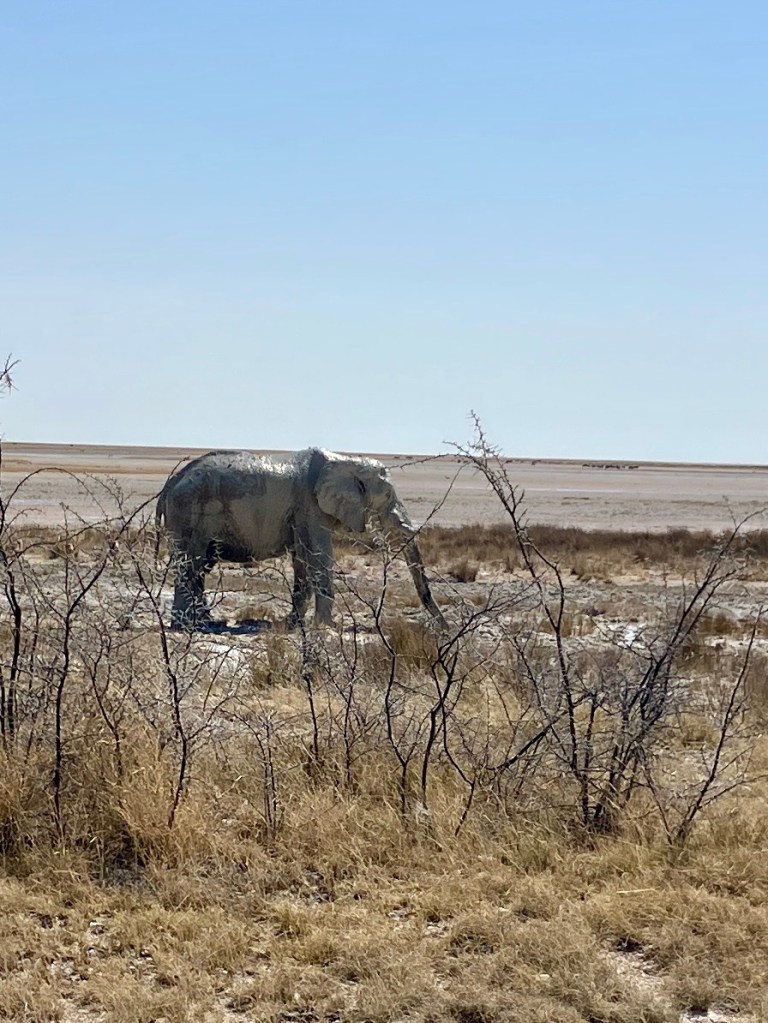
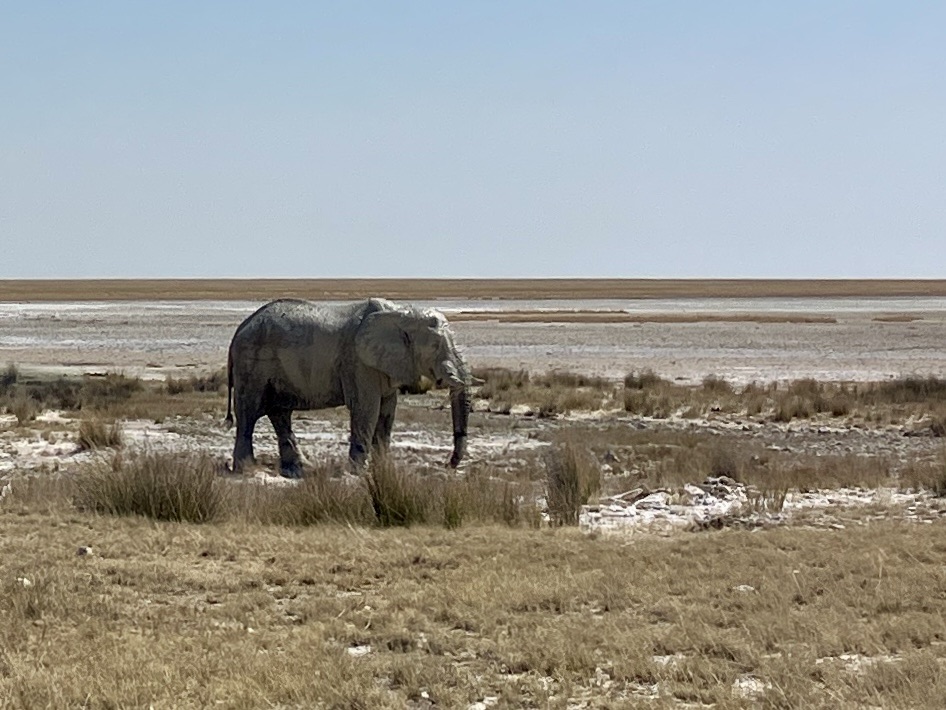
Followed by a close encounter with a few elephants who also wanted to cross the road!
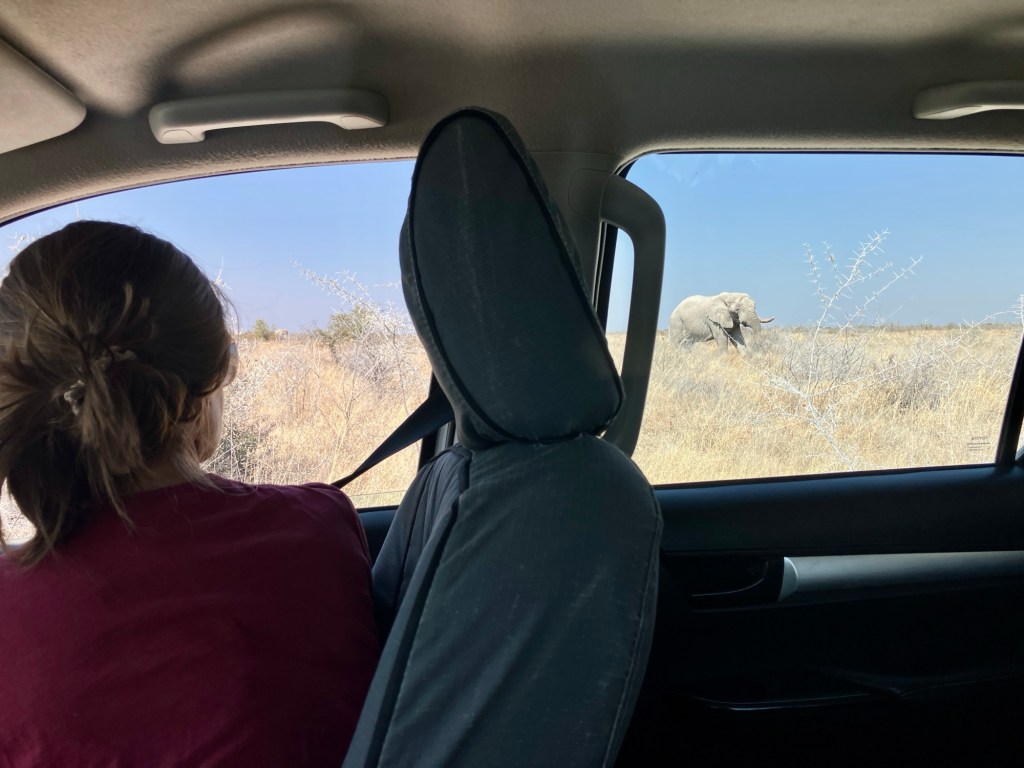
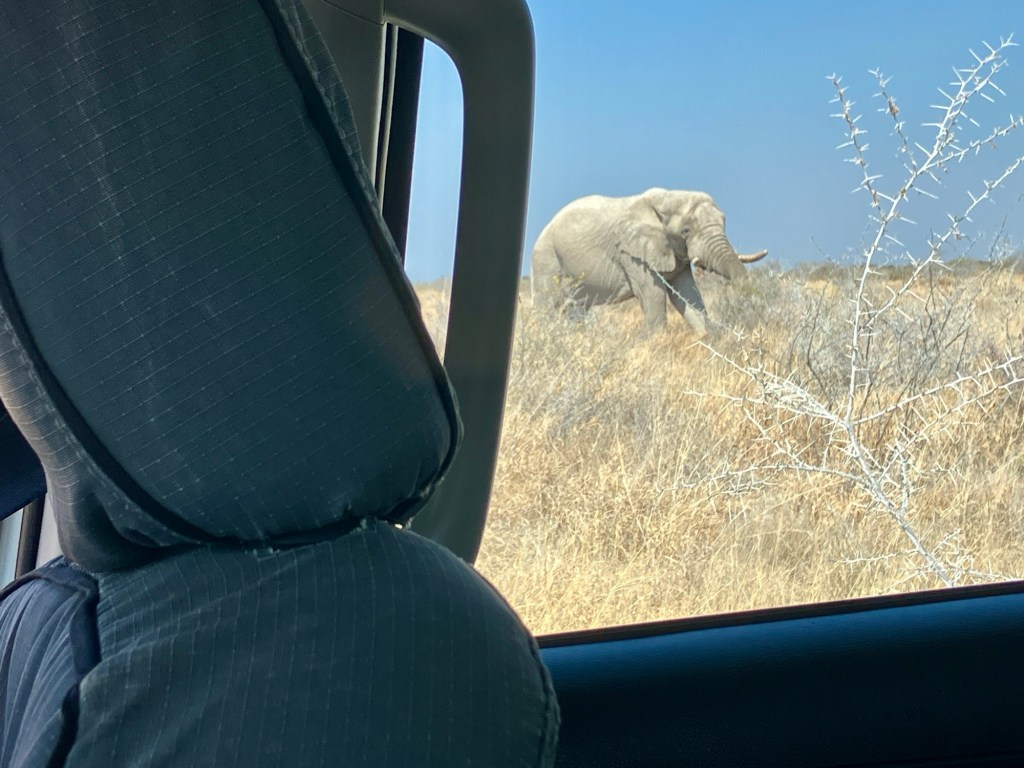
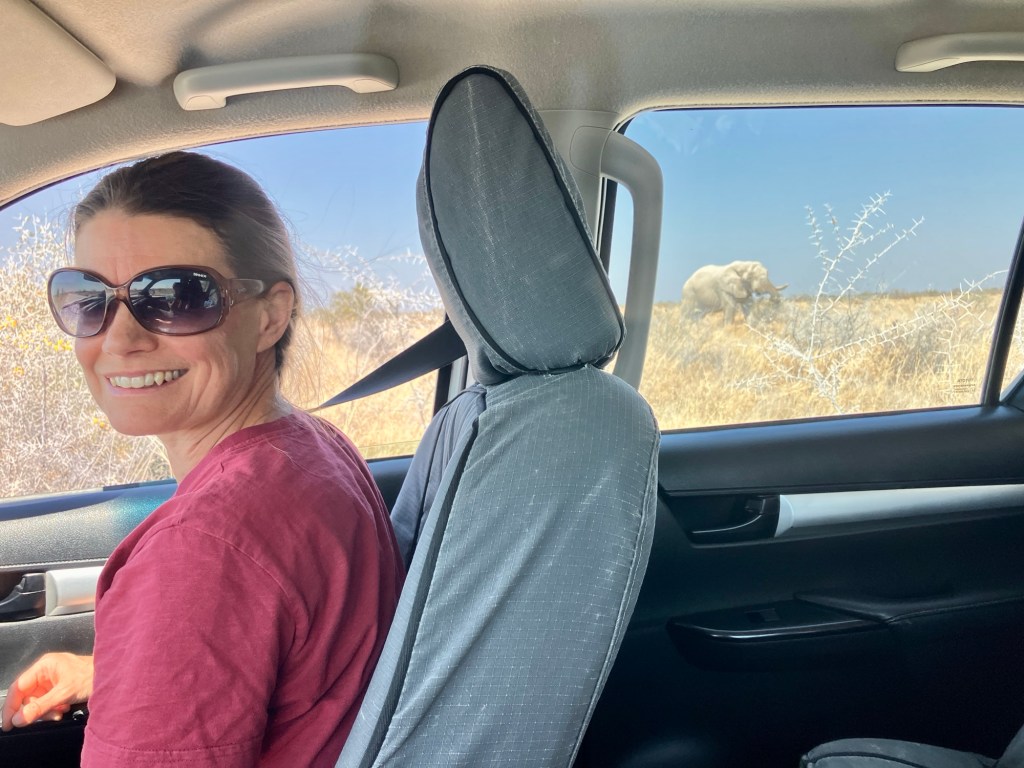
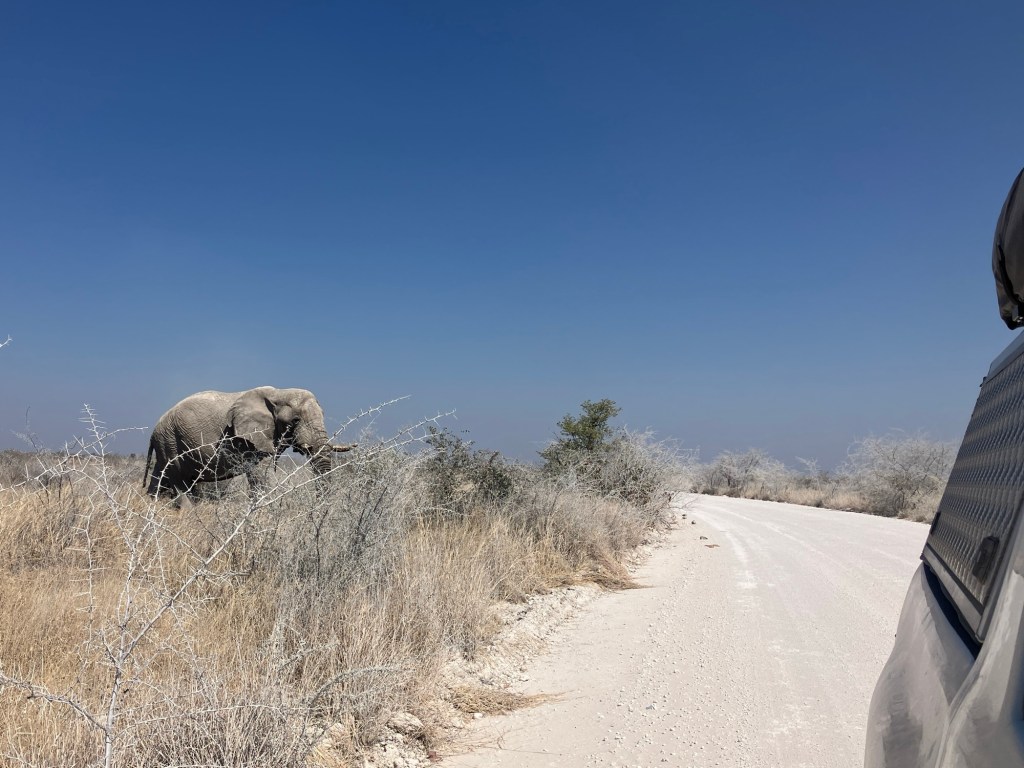
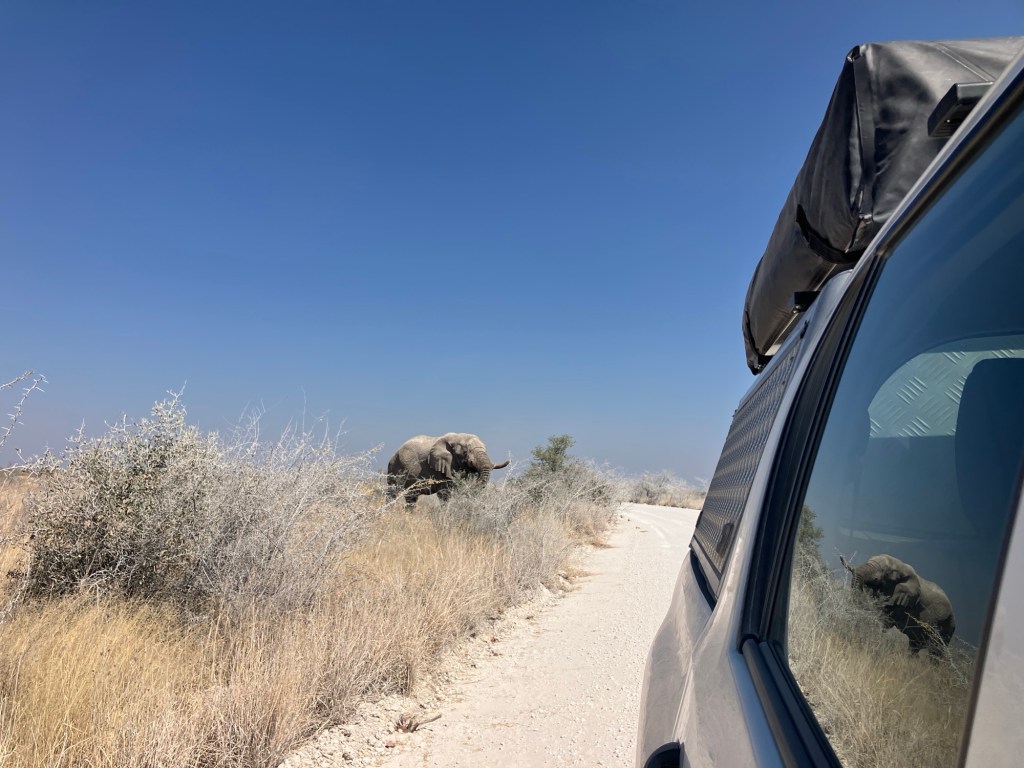
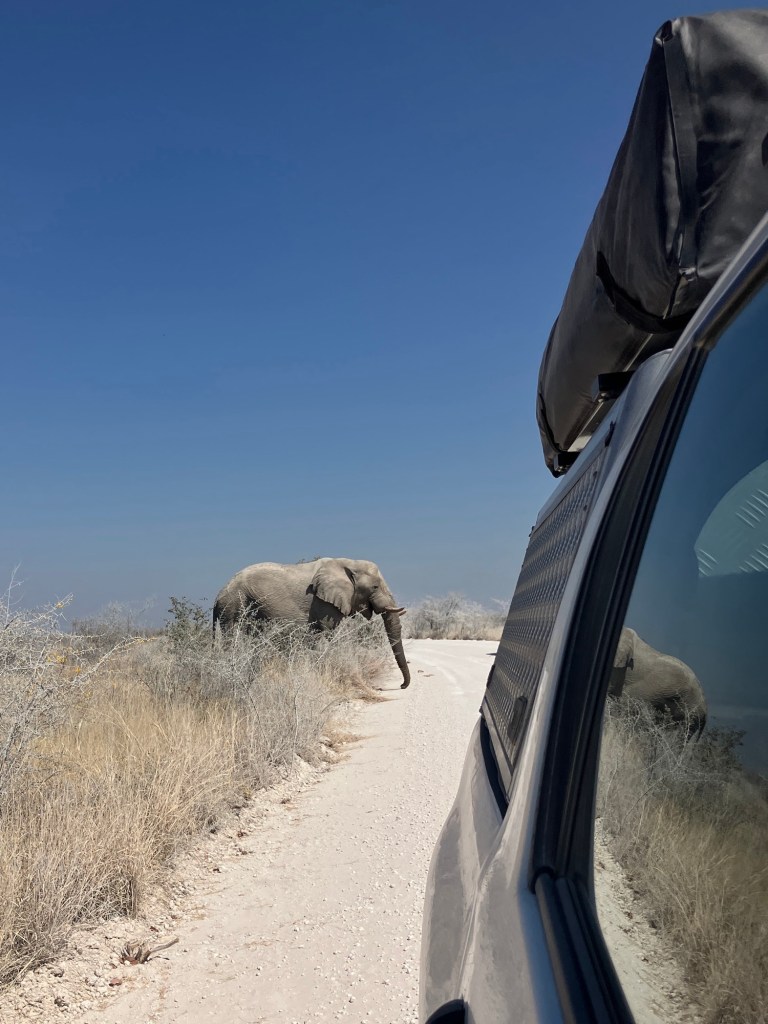
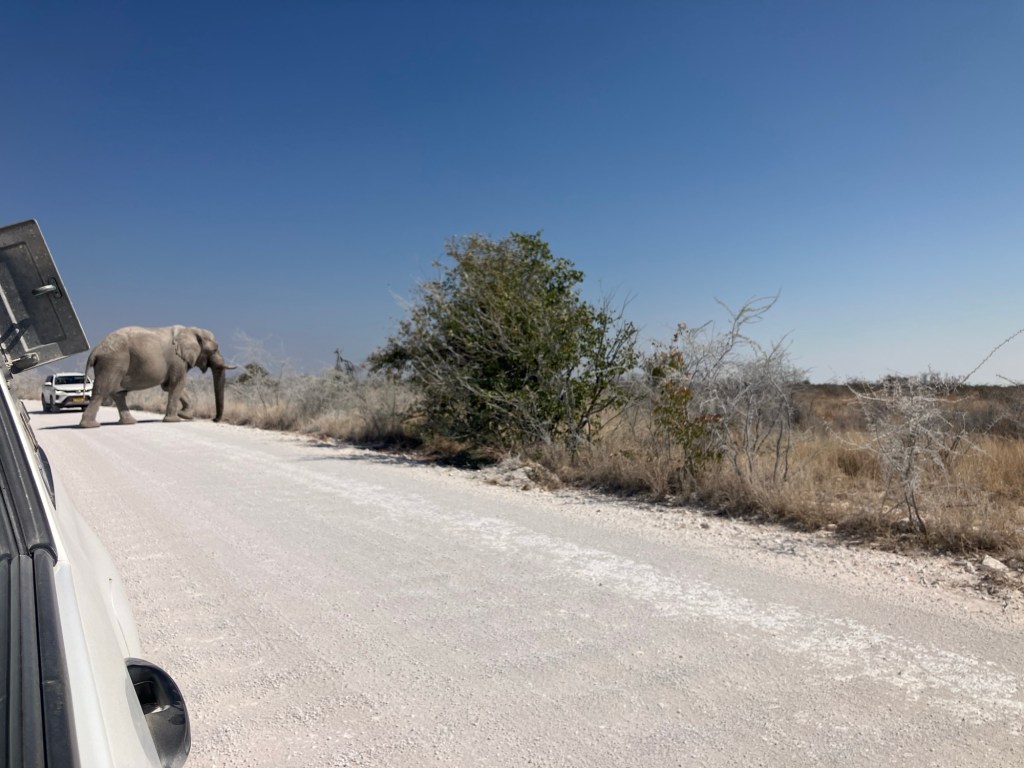
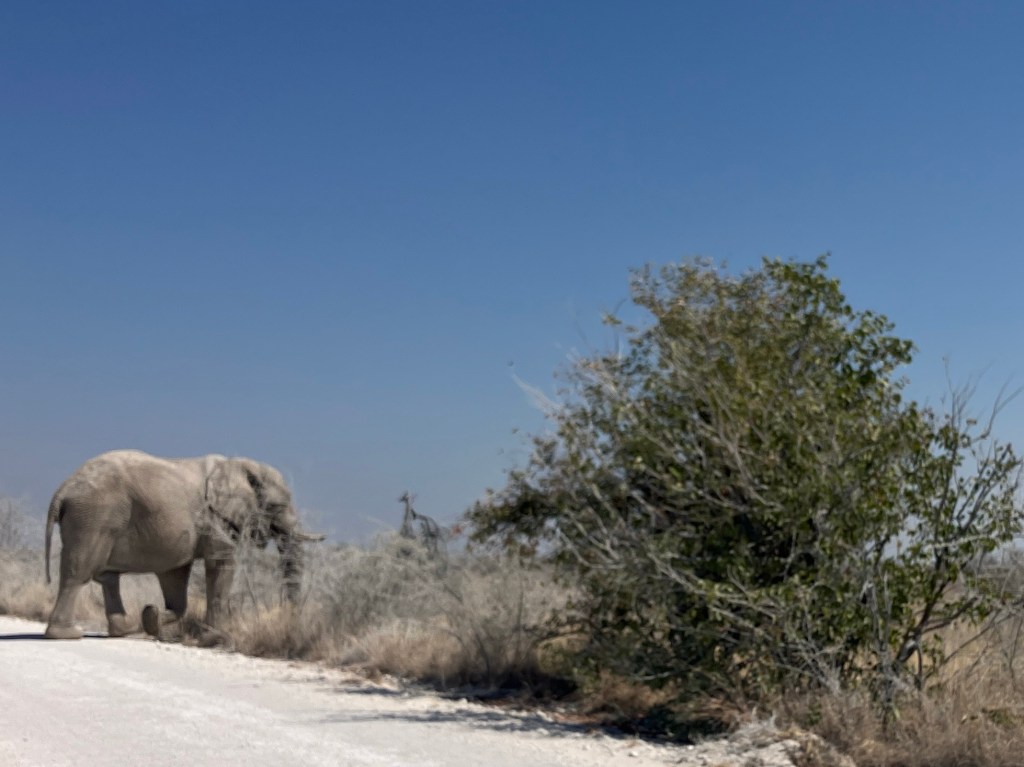
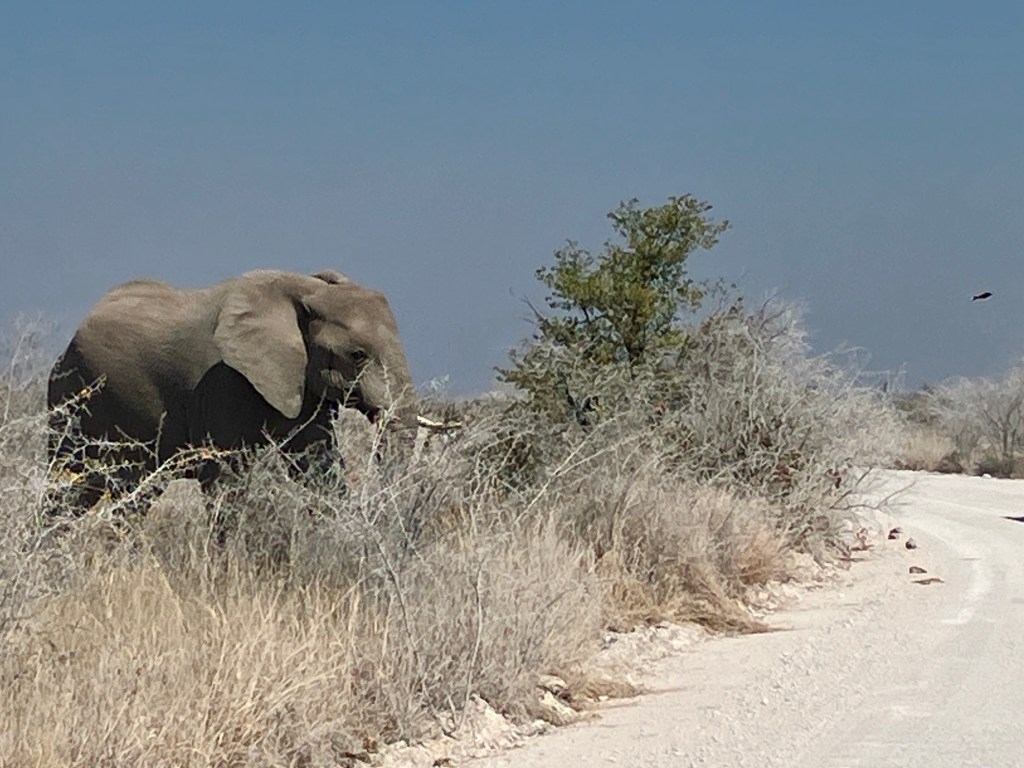
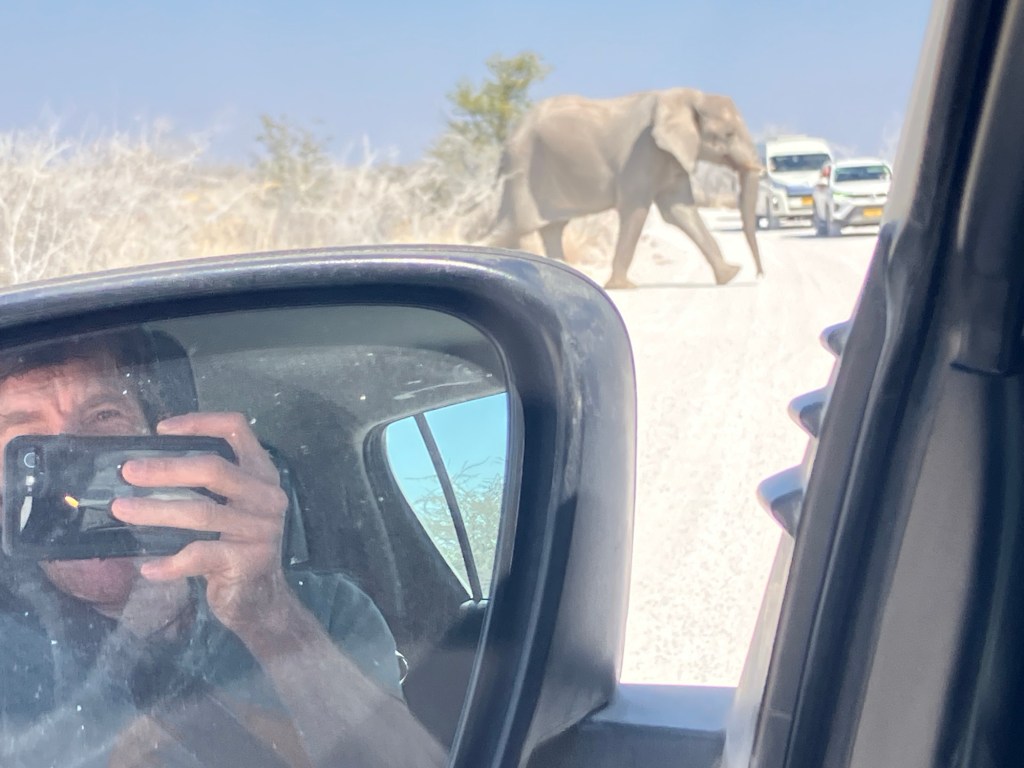
Absolutely amazing to see at such close quarters.
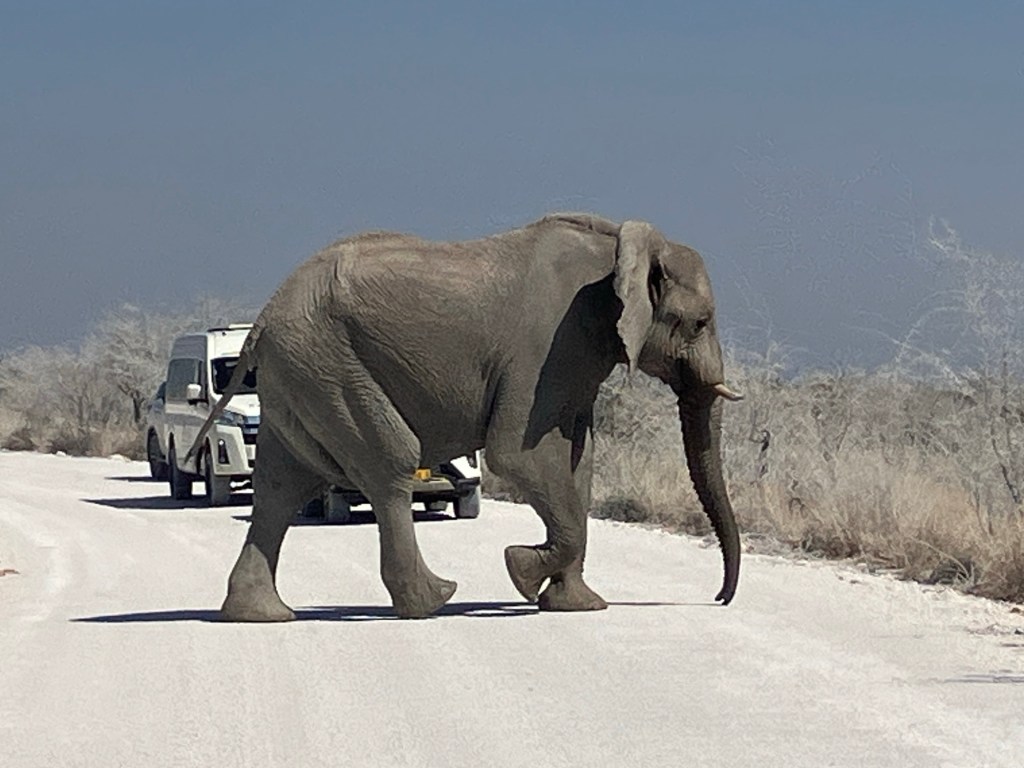
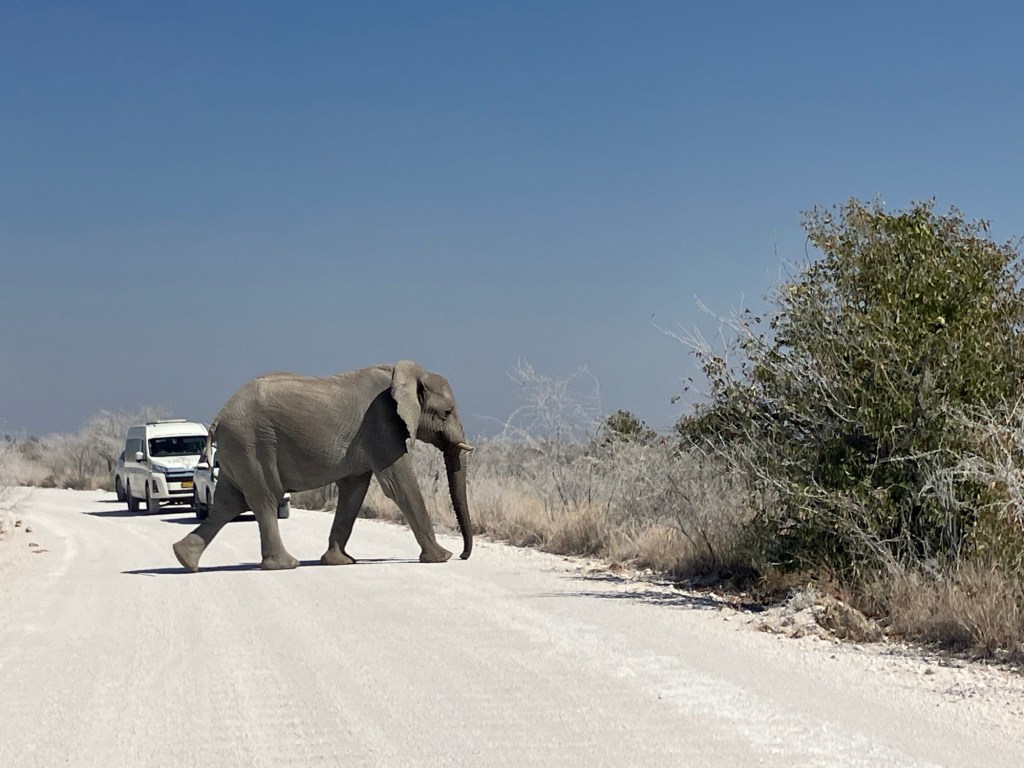
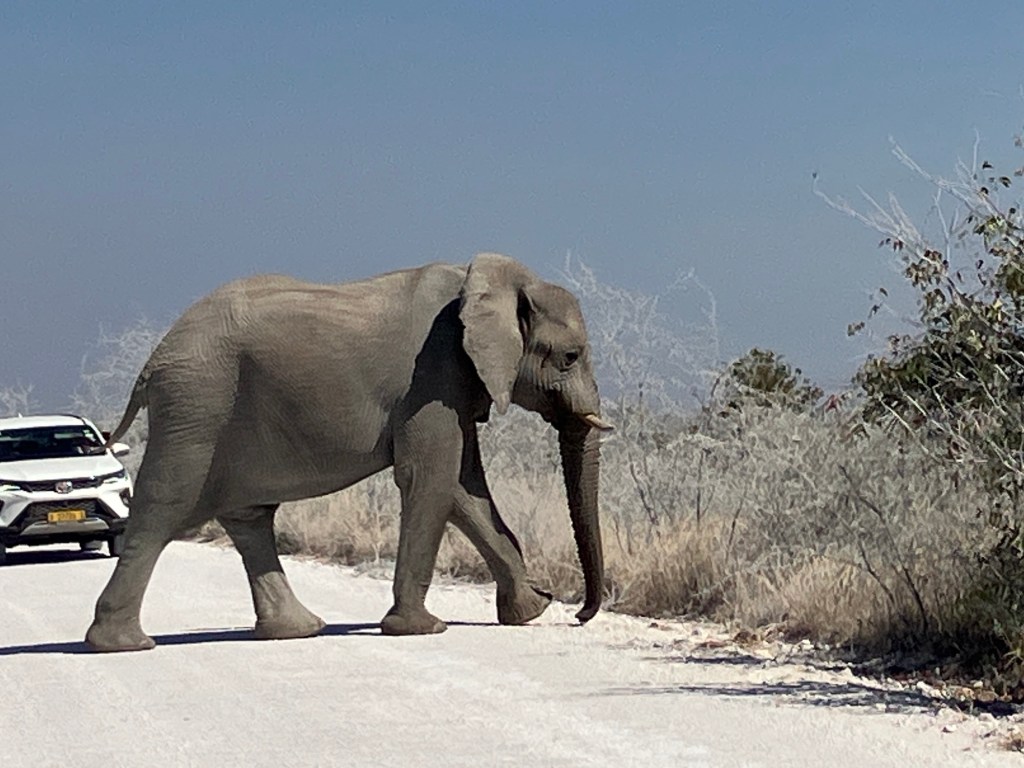
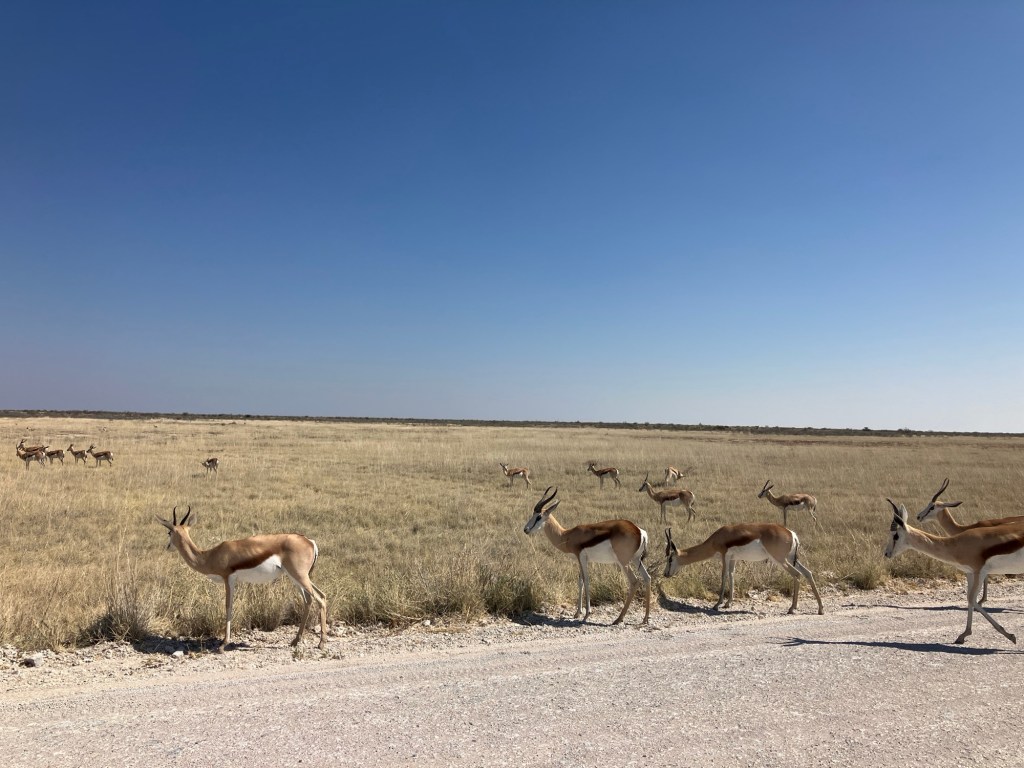
From then on, everywhere we looked, another incredible view, creature or vista appeared.
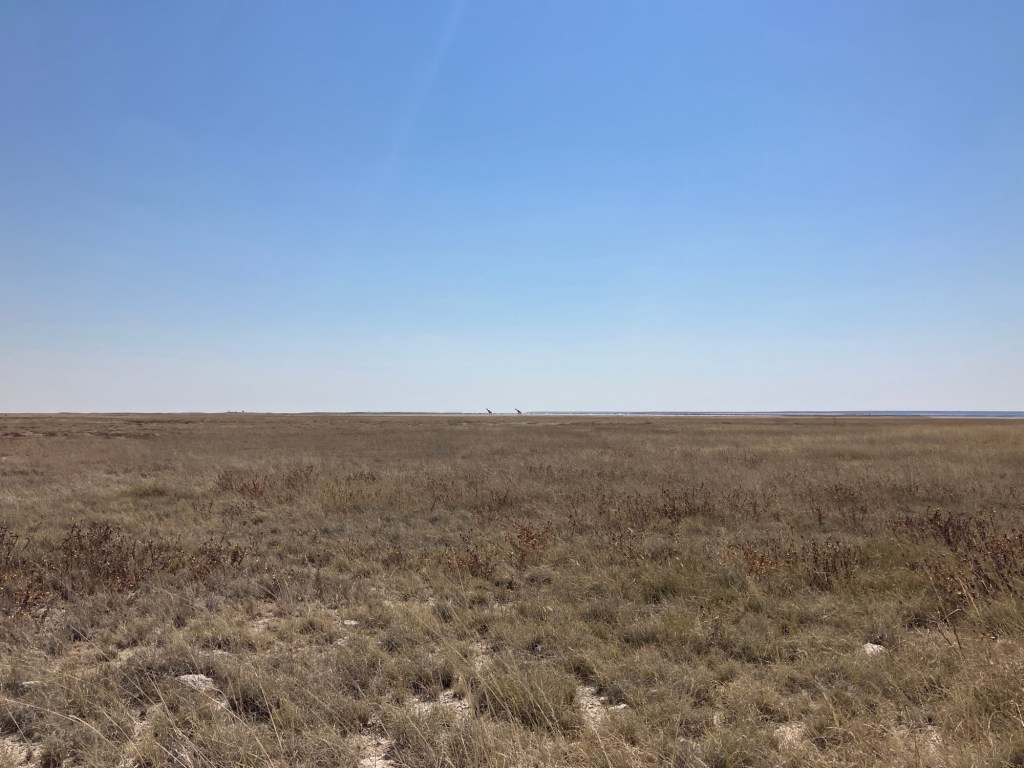
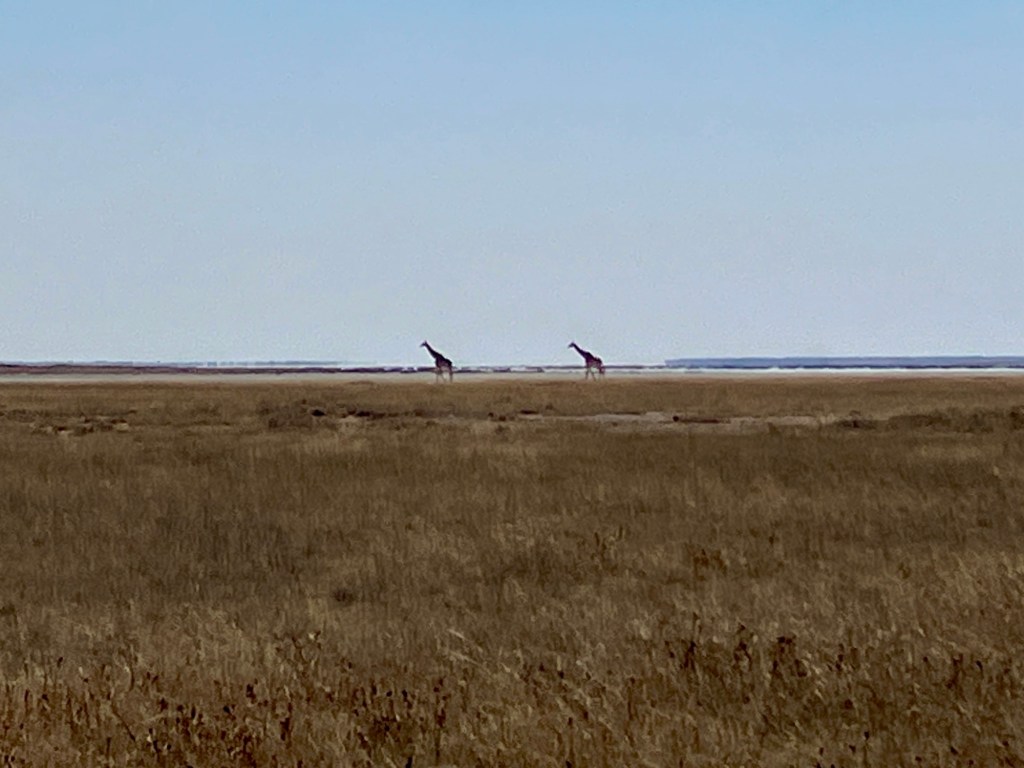
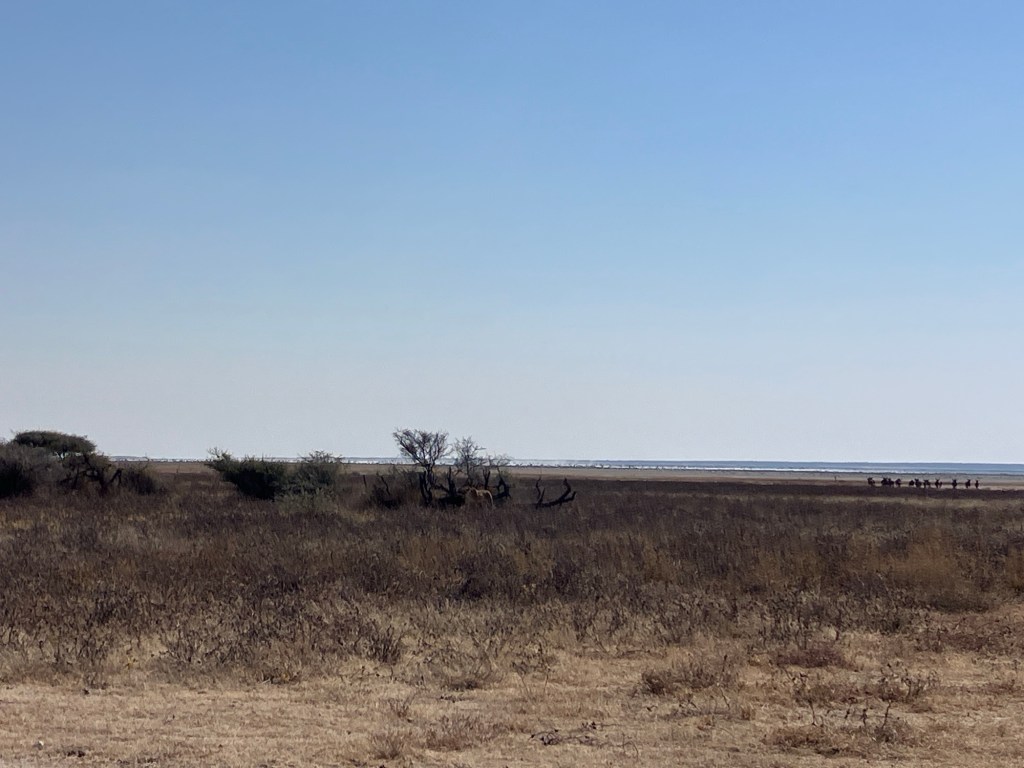
We had a very lucky spot soon after. A lioness was low in the grass, almost invisible to see, except for her ears. Her body language suggested that she was watching something, so we stopped the car and quietly watched the drama unfold.
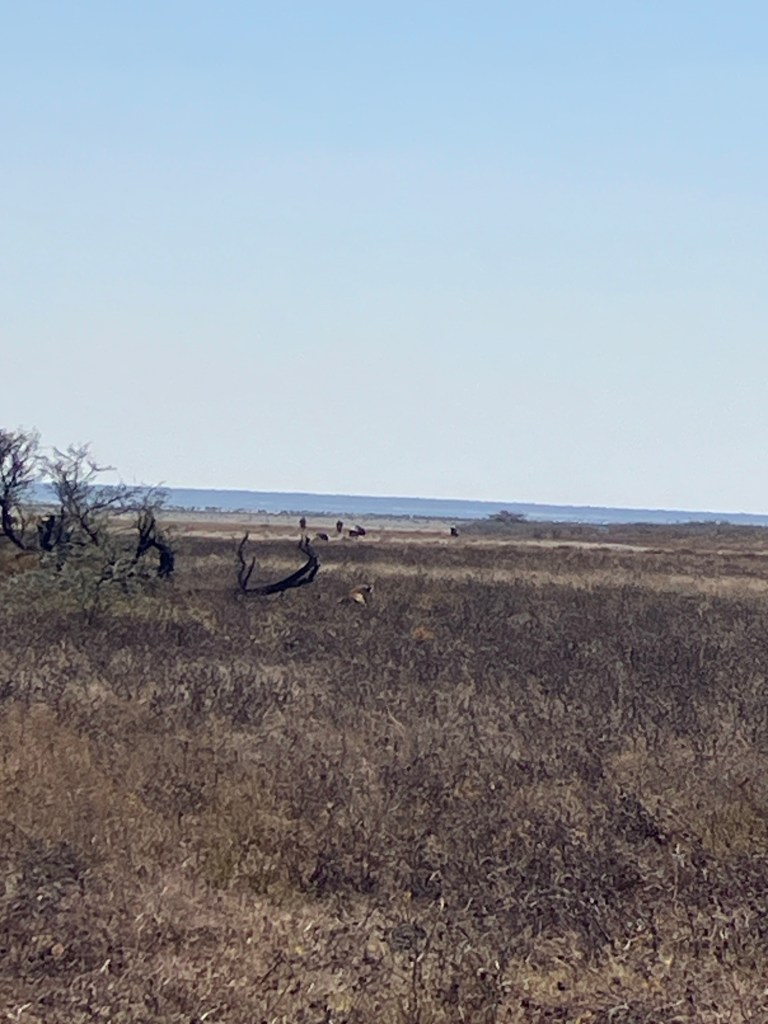
As the lion lay there, poised to strike, a kudu began walking in her direction, oblivious of the lurking danger. The lion dropped low and began moving forward… The tension inside our car was considerable! What were we about to witness!? We were willing the kudu to turn around and back off, while at the same time curious to see what was likely to be a dramatic and graphic demonstration of a literal real life lion hunt!
Just as it seemed that the poor deer was doomed, her ears pricked up. Seconds later she bolted to safety, sending all the others in the vicinity dashing in the same direction. The lion just simply relaxed it’s tense body and casually walked back to the shade of a tree as if to say, oh well, win some, loose some, there’ll be others later.
We drove off feeling shaken!
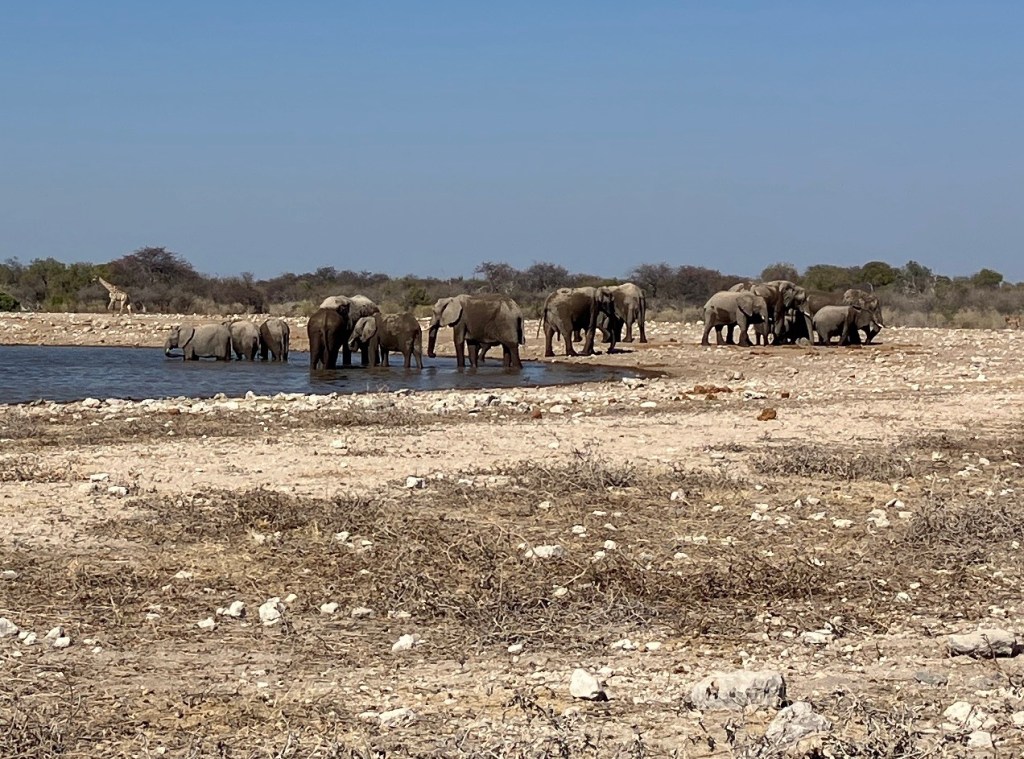
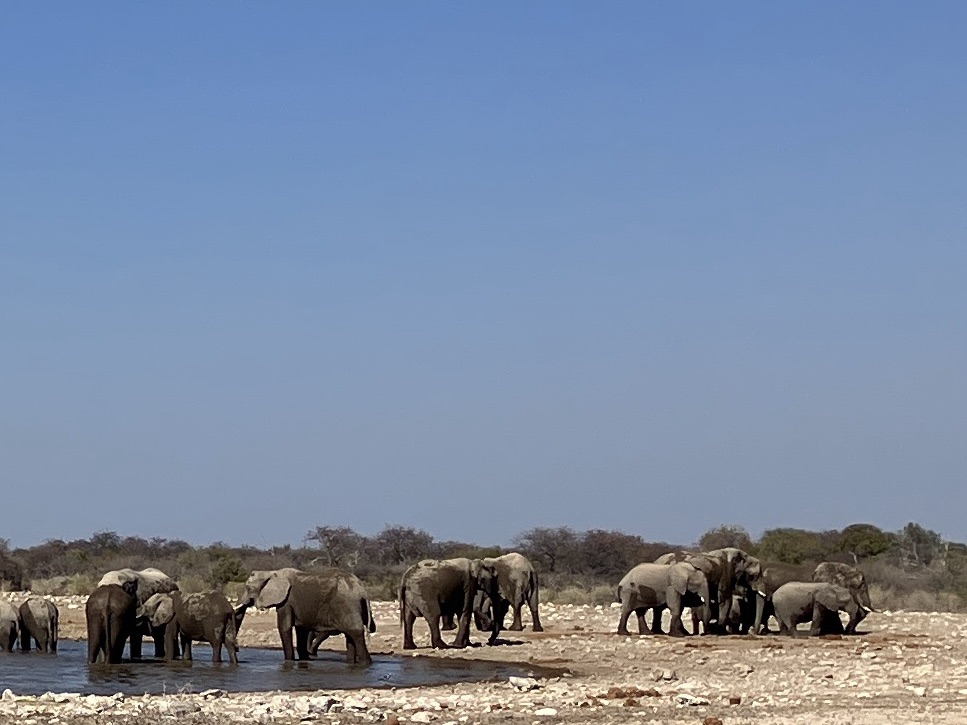
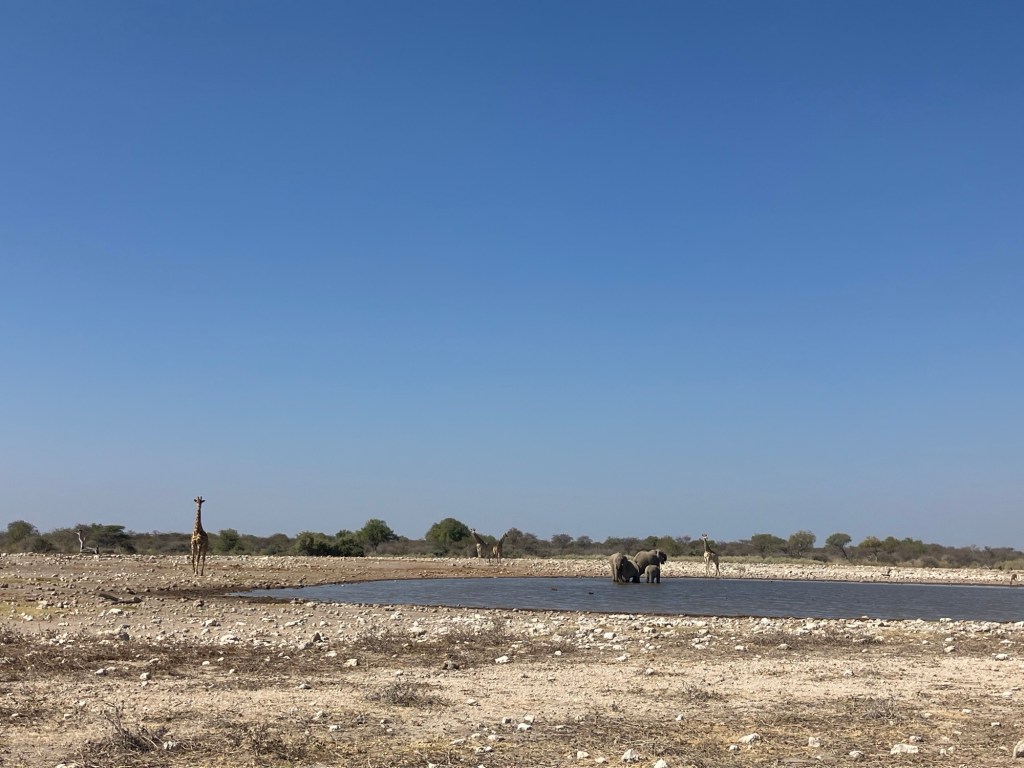
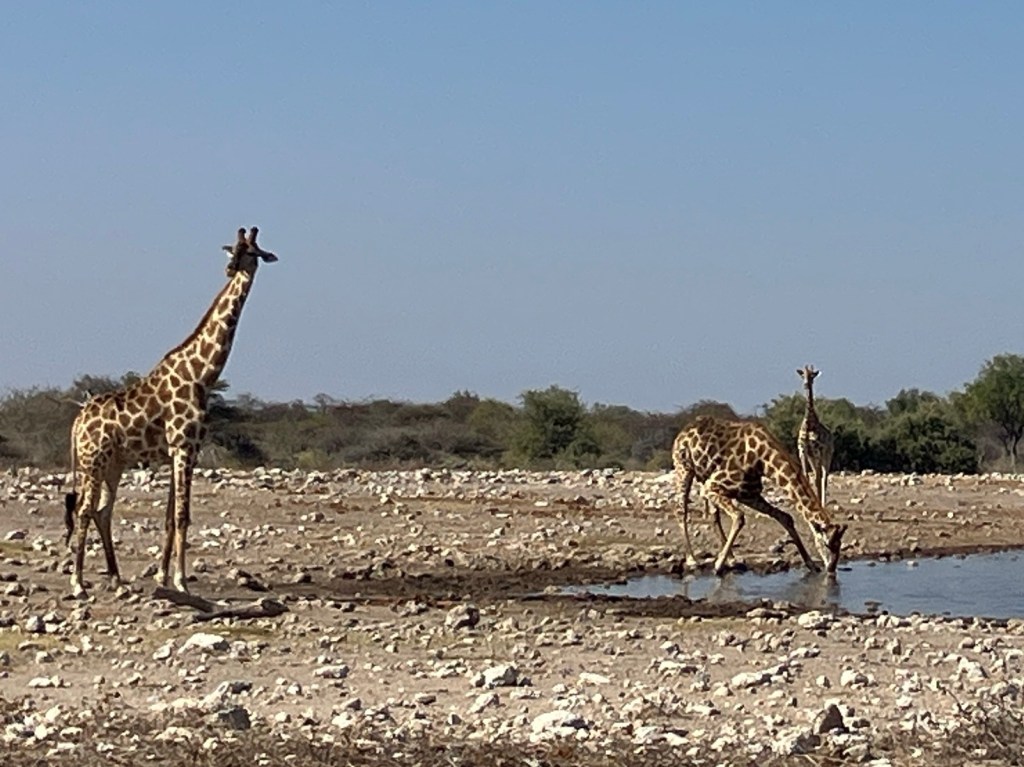
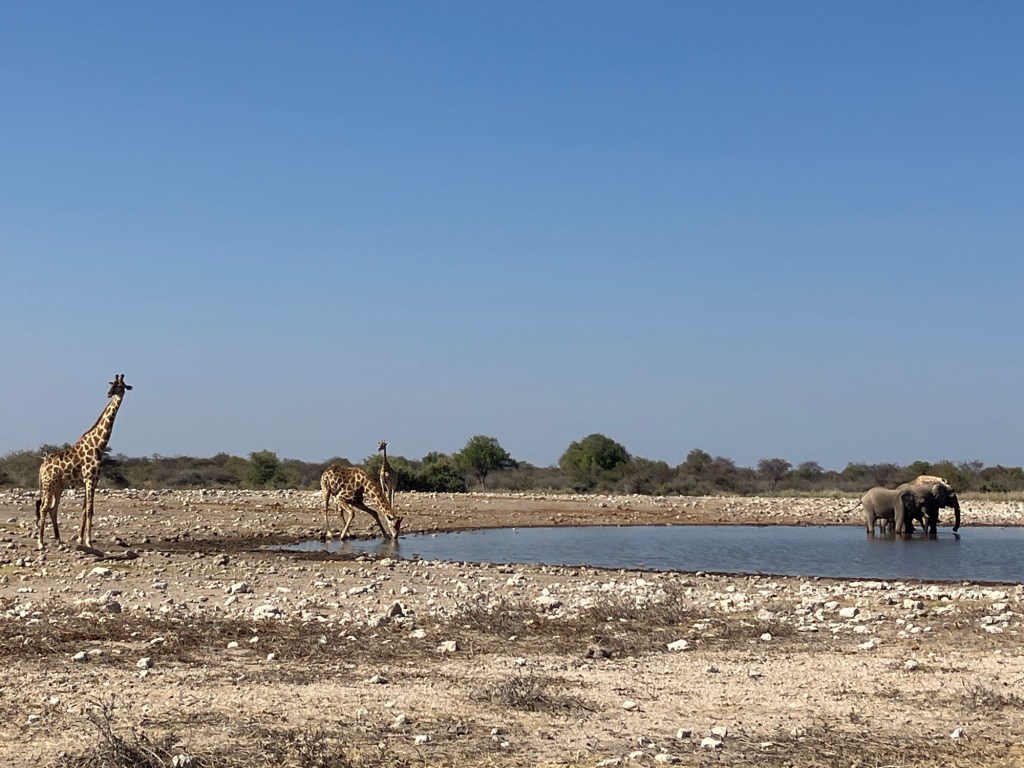
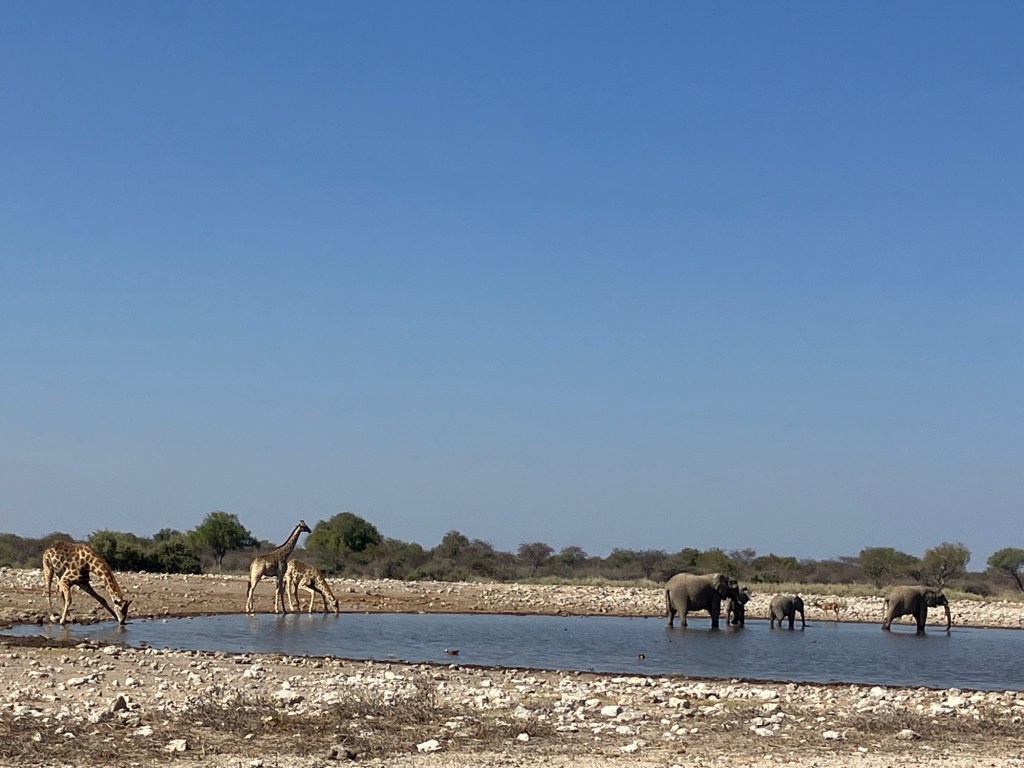
The final watering hole that we visited, just before leaving the park was a real finale! 22 Elephants, including a tiny (well, tiny in elephant terms) one, alongside 18 giraffes. Incredible. Quite an eyeful to be able to take in.
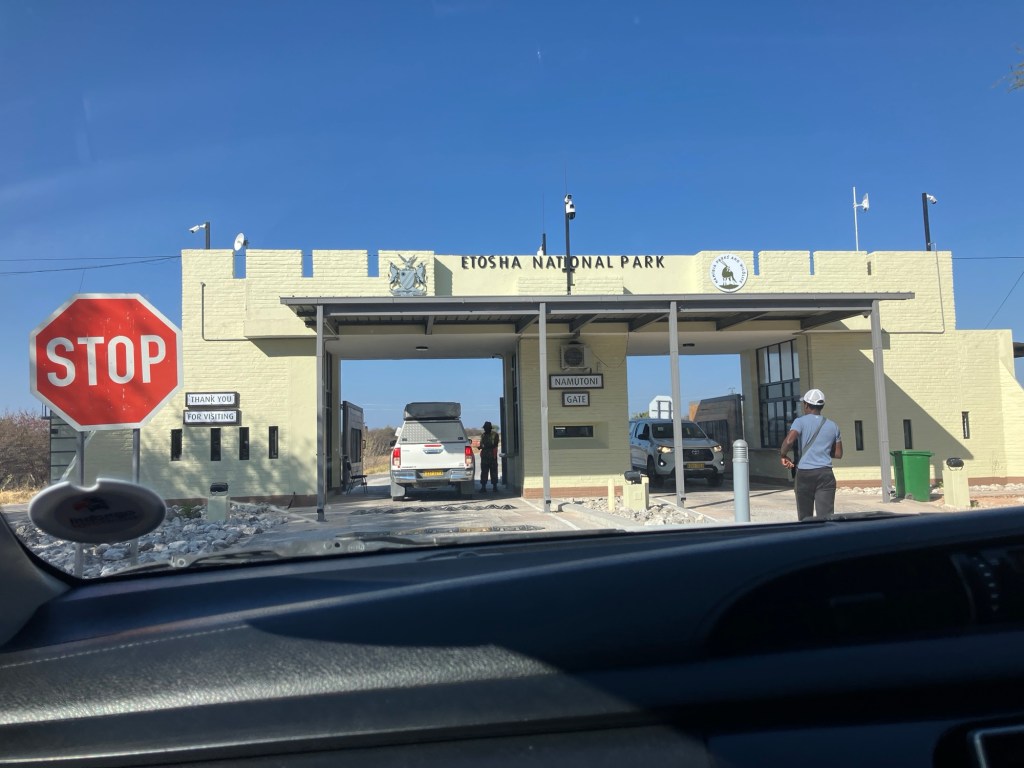
It was late in the afternoon when we reached the exit gate at the eastern edge of the park. We were utterly exhausted from the constant looking, scanning, amazement, wonder, terror, fascination and a whole world of other sights and emotions. And not to mention the fatigue of driving hundreds of kilometres of gravel roads!
Tarmac led us in a more or less straight line for just over another hundred kilometres to the town of Tsumeb. We drove in a stunned daze to where a haven of a hotel room with en-suite hot shower and a cooked meal awaited us.
A lot to take in!…
 Mountain Lifestyle
Leave a comment